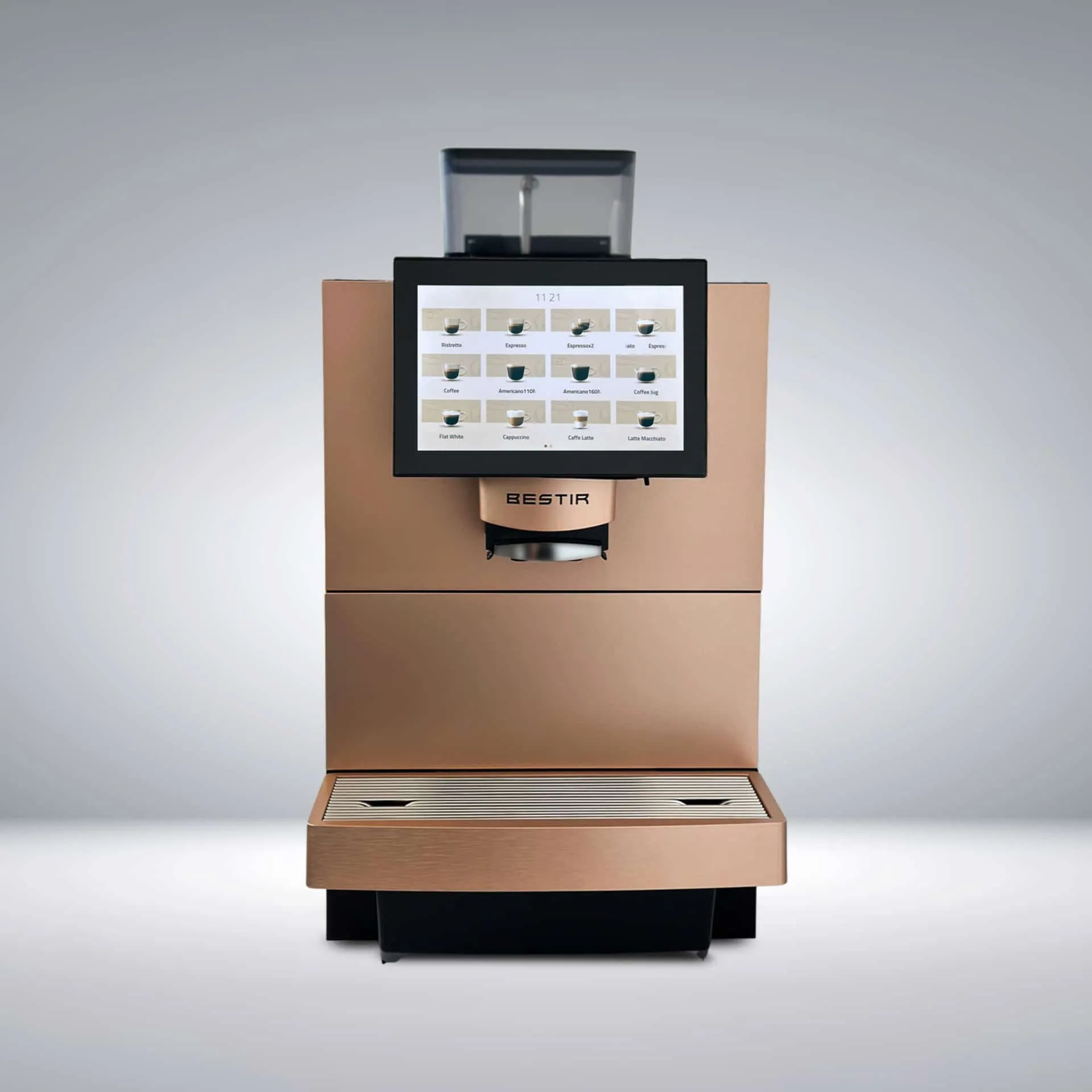
 BESTIR BM50
 BESTIR BM80
 BESTIR BMC300
 Coffetek Vitro M5 MIA
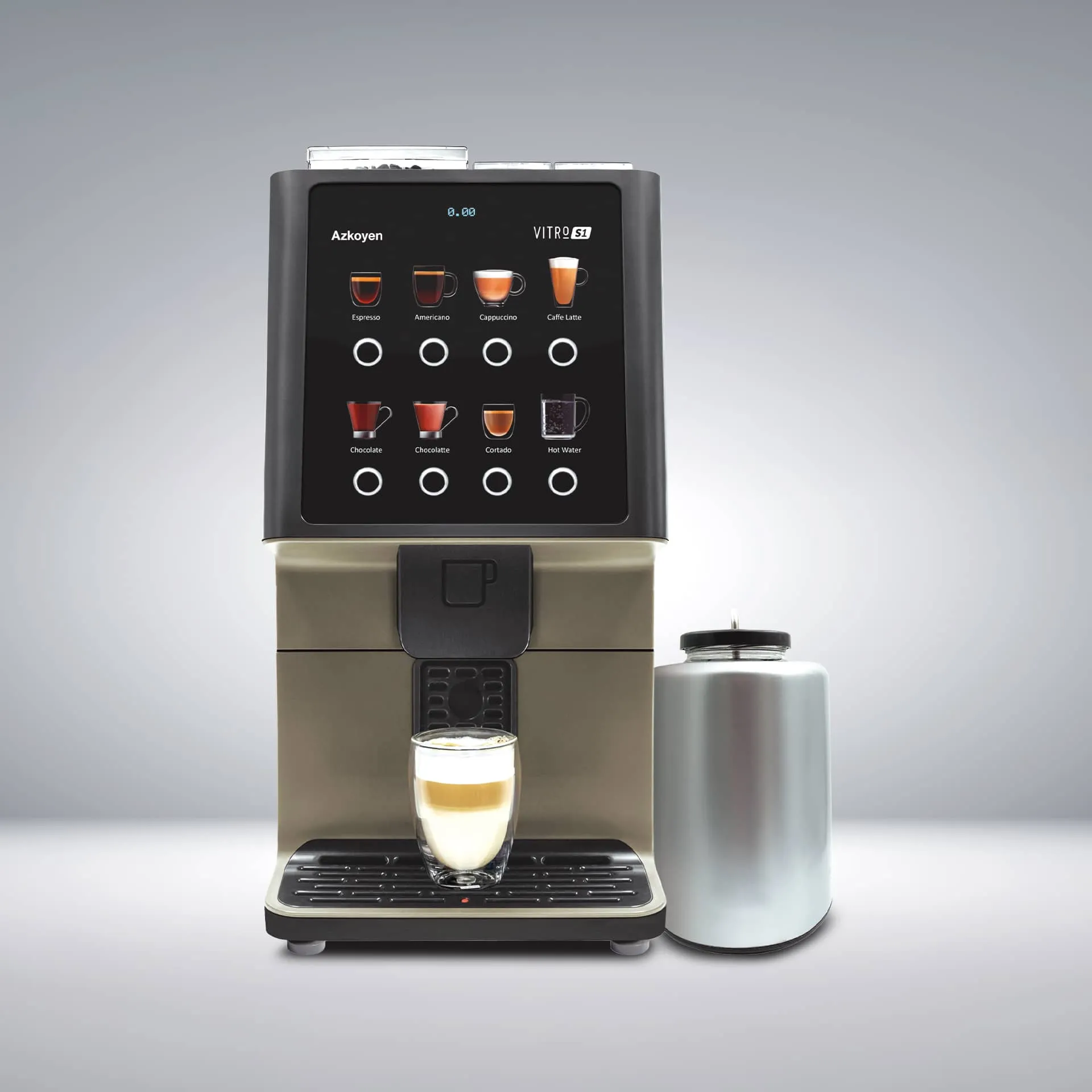
 Coffetek Vitro S1
 Coffetek Vitro S1 MIA
 Coffetek Vitro X1 MIA
 Coffetek Vitro X3
 Primio Coffee Beans
 Espresso Coffee Beans
 Ultimo Coffee Beans
 Vero Coffee Beans
 Coffetek Vitro X4 ESP
 FRANKE A300 FM
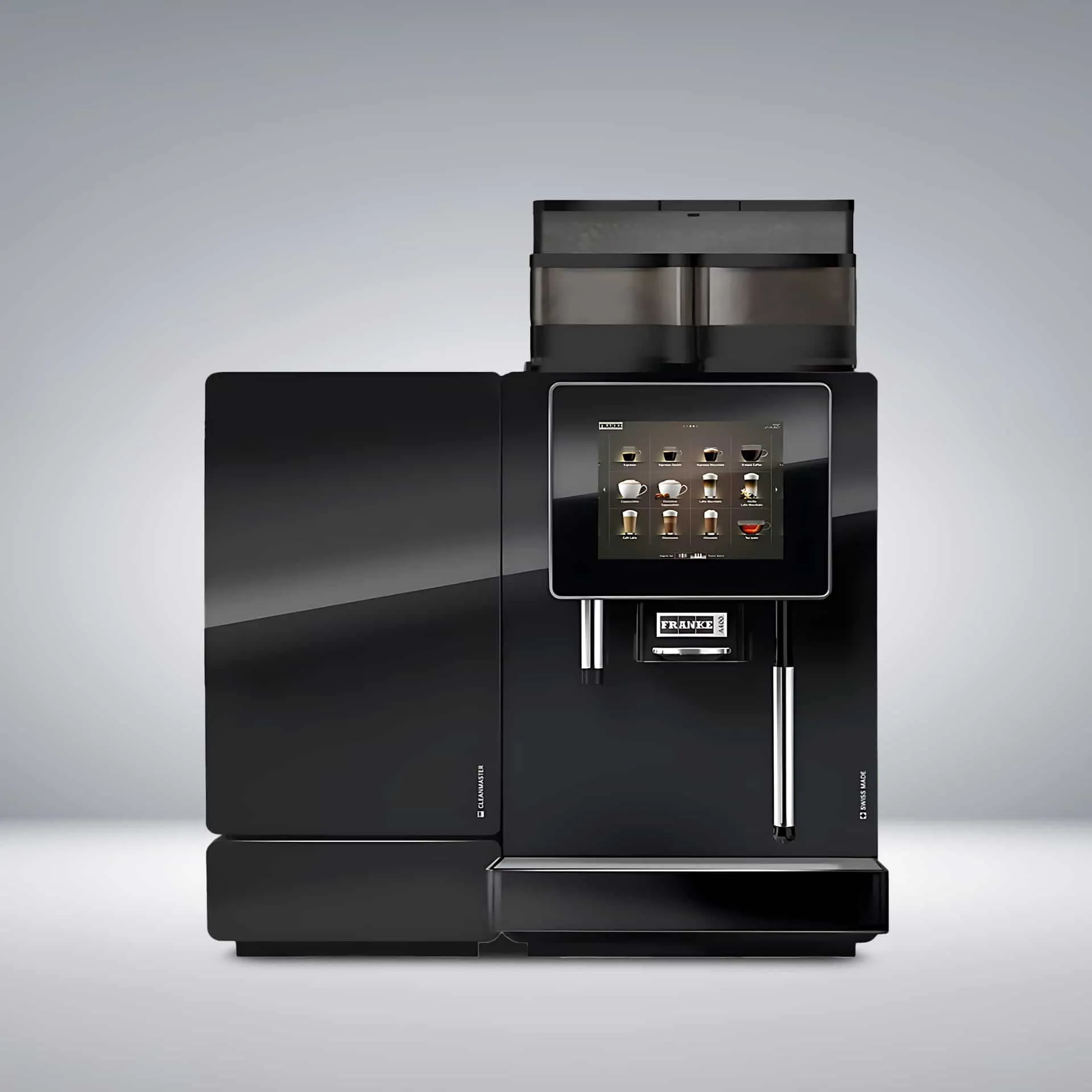
 FRANKE A400
 FRANKE A600
 FRANKE A800
 Gaggia Milano LA BRILLANTE
 Gaggia Milano LA RADIOSA
 Gaggia Milano LA SOLARE
 Jura GIGA X3 GEN II
 Jura GIGA X8 - GEN II
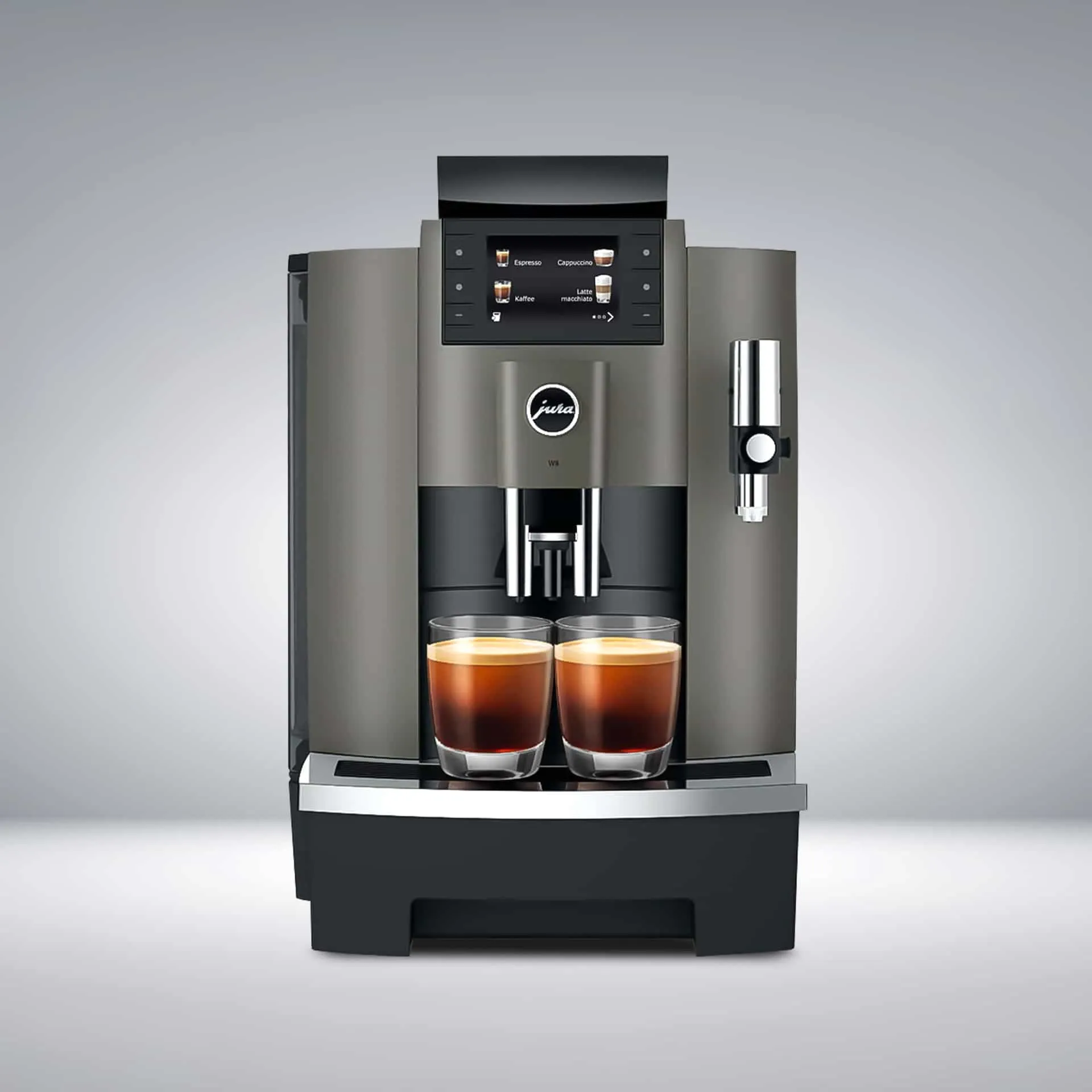
 Jura W8 - GEN II
 Jura X10
 NECTA KALEA PLUS
 Rex-Royal S1
Can Offices Lease Bean to Cup Machines Easily?
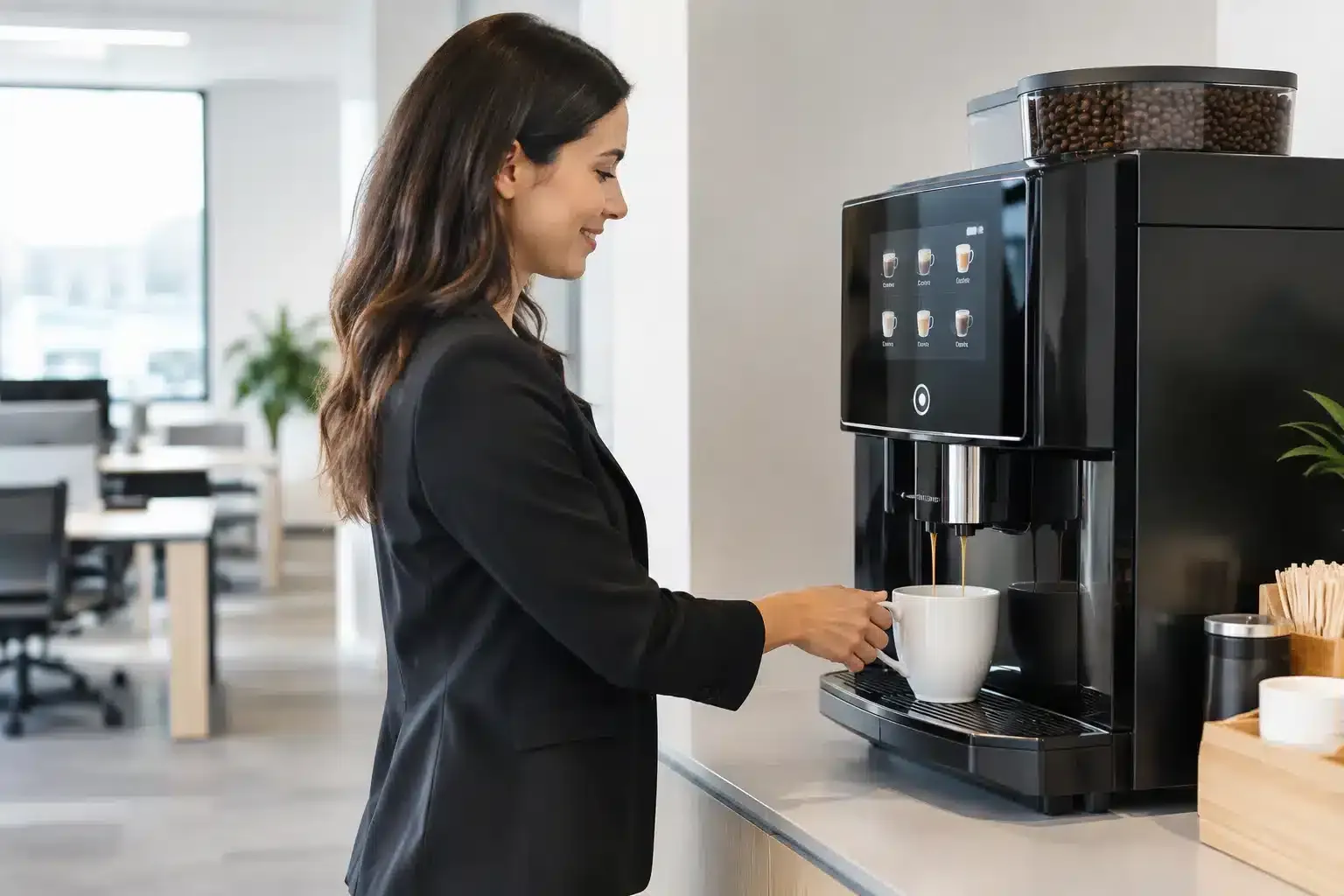
A busy office kitchen is not the place for a machine that needs constant attention, runs out of beans at 10am or produces coffee staff would rather avoid. So, can offices lease bean to cup machines? Yes. For many UK businesses, leasing is a practical way to provide barista-style coffee without paying the full equipment cost upfront.
The right arrangement can spread costs, include support and leave room to change your setup as headcount or demand changes. The detail that matters is not simply whether a lease is available, but whether the machine, contract and service level genuinely suit how your workplace operates.
Can offices lease bean to cup machines for staff and visitors?
Offices of all sizes can lease commercial bean-to-cup machines, from compact models for a small team to high-capacity fresh milk systems serving hundreds of drinks a day. A commercial machine grinds whole beans for each drink and can prepare espresso-based favourites such as americanos, cappuccinos, lattes and flat whites at the touch of a screen.
Leasing is particularly useful when coffee is part of the everyday employee experience or a visible part of customer hospitality. A reception area, meeting suite, showroom or staff breakout space benefits from dependable coffee without asking someone in the office to become the unofficial machine engineer.
Unlike a domestic appliance, a properly specified commercial machine is designed for repeated use. It will usually offer larger bean hoppers, more capable brewing components, configurable drink menus and, depending on the model, a mains water connection. That last point can make a real difference in a high-use setting: no one has to keep topping up a tank between meetings.
A lease can cover the equipment alone, but many businesses choose a broader package that includes coffee supply and optional maintenance. The best fit depends on what you want to manage internally. Some facilities teams are happy to oversee daily cleaning and order beans as required; others prefer a more managed arrangement with planned servicing and responsive support.
Why lease rather than buy a bean-to-cup machine?
Buying outright can be the right decision for a business with capital available, stable requirements and a clear long-term preference for a particular machine. It gives you ownership from day one, although servicing, repairs and eventual replacement still need to be budgeted for.
Leasing shifts the initial investment into predictable monthly payments. That can be easier to approve than a larger capital purchase, particularly when a business is fitting out a new office, opening another site or improving workplace amenities alongside other costs.
Flexibility is often the stronger reason. A 20-person office may only need a compact machine today, but a growing team, return-to-office policy or new client area can change demand quickly. Depending on the agreement, leasing may make it more straightforward to upgrade to a higher-capacity machine or move to a fresh milk model when the original setup is no longer the right match.
It is worth separating leasing from rental, as the terms are sometimes used loosely. A lease commonly has an agreed fixed term and payment structure. Rental arrangements can offer more flexibility, often with shorter commitments and service provisions built in. Neither is automatically better. The sensible choice comes down to your budget, expected usage, desired commitment length and how likely your requirements are to change.
Start with cups per day, not the machine catalogue
The most expensive machine is not always the best machine for your office. Equally, a lower-cost unit can become poor value if it struggles during the morning rush, requires frequent refilling or cannot keep up with milk-based drinks.
Start by estimating daily cup volume. Do not only count employees. Include regular visitors, meeting-room hospitality, client events and the likely increase in use once better coffee is available. An office of 40 people might make 50 drinks a day in one workplace and 140 in another. Culture matters as much as headcount.
Then consider where the machine will sit. A compact countertop model may be ideal for a small kitchenette, while a busy office hub may need a wider machine, refrigerated fresh milk unit and direct water feed. If plumbing is not practical, a tank-fed option may still work well, but someone will need to refill it consistently.
Milk choice deserves proper attention. Fresh milk gives a premium finish and is often the preferred choice for staff and guest-facing environments, but it requires good daily hygiene routines and refrigeration. Powder or alternative milk systems can reduce some handling requirements and suit particular locations, although the drink experience is different. There is no universal answer - it should reflect your users and operational capacity.
What should an office lease include?
A competitive monthly figure is only useful when you understand what sits behind it. Before signing, ask what is included in the agreement and what is charged separately. Coffee beans, installation, delivery, water filtration, call-outs, replacement parts and planned maintenance can all affect the true monthly cost.
Daily care remains important even with a service plan. Bean-to-cup machines need regular cleaning, milk-system flushing where relevant and emptying of drip trays and grounds containers. A good supplier will explain these routines clearly and provide training, rather than leaving a facilities manager with a manual and a problem.
For a machine that supports staff breaks or customer hospitality, downtime matters. Ask how faults are reported, what response time is offered and whether loan equipment is available in the event of a longer repair. Also check who is responsible for descaling and filter changes. In hard-water areas, correct filtration is essential for coffee quality and machine longevity.
The contract itself should be equally clear. Confirm the minimum term, notice period, early termination position, end-of-term options and whether an upgrade is possible. If your business is relocating, ask what happens to the equipment and whether reinstalling it at a new site is included. No pressure, just expert advice should also mean no surprises in the small print.
How much does it cost to lease an office coffee machine?
Monthly costs vary because commercial coffee requirements vary. A straightforward bean-to-cup machine for a modest team will generally cost less than a high-output fresh milk machine with a mains water connection, multiple hoppers and a comprehensive maintenance package.
Rather than comparing payments in isolation, compare the operating outcome. A cheaper machine that needs staff attention several times a day, cannot deliver drinks quickly or results in frequent repair costs may not be the economical choice. A more suitable machine can protect staff time, improve the coffee experience and give visitors a better impression of your business.
Coffee consumption should also be part of the calculation. Good beans make a noticeable difference, and a machine should be adjusted to suit them. Businesses can control spend by agreeing a sensible bean supply plan based on expected usage, rather than ordering reactively whenever the cupboard looks empty.
Choosing a supplier that can support the whole setup
A good office coffee solution begins with questions, not a push towards one machine. A supplier should want to know your team size, expected cups per day, preferred drinks, milk requirements, available counter space, water access and budget. A site assessment can identify practical issues before installation, such as power availability, drainage, access and the best location for the machine.
Full House Coffee takes this consultative approach because machine choice is only one part of a dependable service. The aim is to match a commercial coffee setup to the way your business works, then provide the beans and support needed to keep it working well.
Leasing can make premium workplace coffee achievable without turning it into another operational headache. Choose for real demand, read the service terms carefully and leave enough room for your business to grow. The result should be simple: better coffee, fewer interruptions and one less thing for your team to worry about.