 BESTIR BM50
 BESTIR BM80
 BESTIR BMC300
 Coffetek Vitro M5 MIA
 Coffetek Vitro S1
 Coffetek Vitro S1 MIA
 Coffetek Vitro X1 MIA
 Coffetek Vitro X3
 Primio Coffee Beans
 Espresso Coffee Beans
 Ultimo Coffee Beans
 Vero Coffee Beans
 Coffetek Vitro X4 ESP
 FRANKE A300 FM
 FRANKE A400
 FRANKE A600
 FRANKE A800
 Gaggia Milano LA BRILLANTE
 Gaggia Milano LA RADIOSA
 Gaggia Milano LA SOLARE
 Jura GIGA X3 GEN II
 Jura GIGA X8 - GEN II
 Jura W8 - GEN II
 Jura X10
 NECTA KALEA PLUS
 Rex-Royal S1
Choosing a Coffee Machine for Busy Reception Areas
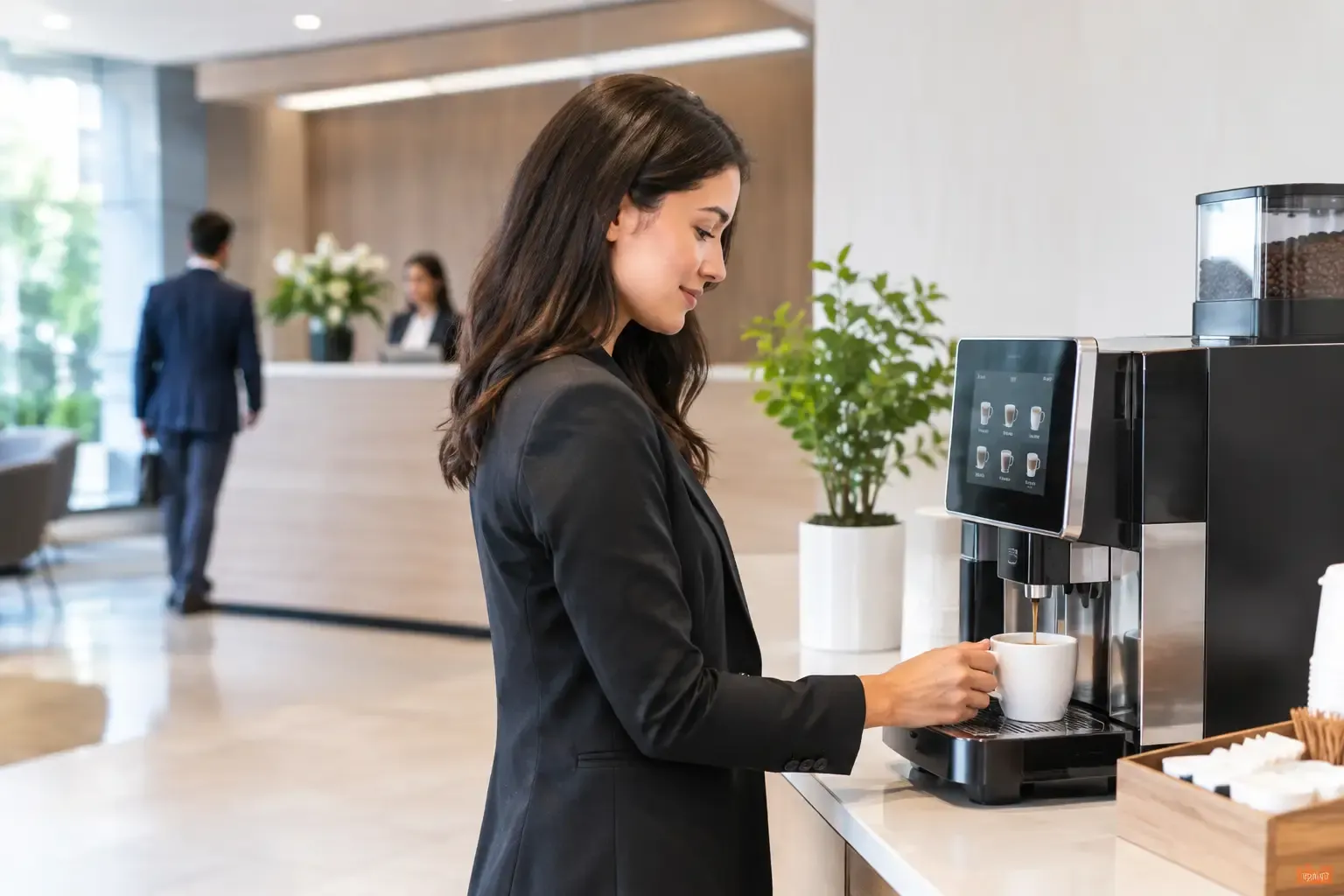
The queue tends to form at the least convenient moment: just before a client meeting, during the morning arrival rush or when a showroom visit runs over. A coffee machine for busy reception needs to do more than make a pleasant flat white. It must serve quickly, look professional, cope with varied orders and keep the person behind the desk focused on welcoming people rather than fixing a machine.
For offices, hotels, showrooms and customer-facing workplaces, reception coffee is part of the experience you provide. Get it right and visitors feel looked after before the conversation has even begun. Choose solely on headline price or appearance, however, and a supposedly simple amenity can become a daily operational nuisance.
What a busy reception coffee machine needs to handle
Reception demand is different from a staff kitchen. Usage often comes in sharp peaks rather than evenly across the day. Ten drinks may be needed in 15 minutes, followed by a quiet hour, then another burst after a meeting finishes. The machine therefore needs enough capacity and recovery speed for the busiest period, not merely an average daily cup estimate.
Start with a realistic view of daily volume, including staff drinks if they use the same machine. A reception serving 30 to 50 cups a day has different requirements from a hotel lobby or large corporate site serving well over 100. A commercial machine should be specified with headroom, particularly where hospitality is central to the customer journey. Running a machine at the very top of its intended output every day rarely gives the best result for drink quality or reliability.
Speed is about more than the brewing cycle. Consider the size of the water tank or whether a plumbed-in connection is possible, the bean hopper capacity, grounds drawer size and milk system. If each of these needs attention during the peak period, the queue will still grow even if the machine itself produces espresso quickly.
Choose the right coffee machine for a busy reception
Bean-to-cup machines are usually the natural starting point for a professional reception. They grind coffee for each drink, offer a consistent menu at the press of a button and remove the need for a trained barista. For a workplace where first impressions count, they also create the aroma and theatre people associate with fresh coffee.
The right specification depends on how your guests are served. A self-service machine should have a clear display, straightforward drink selection and an intuitive cleaning routine. If a receptionist makes the drinks, menu flexibility may matter more, especially where visitors commonly request cappuccinos, lattes, americanos and hot water for tea.
Fresh milk is often the premium choice. It delivers a fuller texture and a more convincing café-style finish, which can be particularly valuable in client-facing offices, dealerships and hotel receptions. The trade-off is that fresh milk requires disciplined daily cleaning and suitable refrigerated storage. A machine with a refrigerated milk fridge or integrated cooling unit keeps the setup tidy, but it still needs someone assigned to check, clean and replenish it.
Powdered milk systems can suit lower-touch environments where ease of operation takes priority over the very best milk texture. They are convenient, consistent and useful where staffing is limited. They may not be the right fit if the reception coffee offer is intended to match a quality independent café. There is no universal winner here. The decision comes down to expected drink quality, available staff time and the standards your visitors will notice.
Capacity is more than cups per day
Manufacturers often state a recommended number of cups per day. That figure is helpful, but it is only one part of the selection process. A machine rated for 100 cups a day may be entirely suitable for a 60-cup reception if demand is spread throughout the day. It may be less suitable if most drinks are ordered in two intense meeting breaks.
Ask how many consecutive milk drinks the machine can make without slowing down. Check the size of the boiler or heating system, whether it can brew and steam efficiently at the same time, and how quickly the milk unit recovers. These details affect the experience far more than a broad daily capacity label.
Bean capacity also deserves attention. A small hopper may be fine for a quiet reception, but it creates unnecessary interruptions where several teams, visitors and meeting rooms draw from one machine. A second hopper can be useful when you want to offer decaffeinated beans without relying on a separate manual option. It adds flexibility, although it is only worth paying for if people will genuinely use it.
Plan the reception setup, not just the machine
A good machine can be undermined by poor placement. Reception counters are often tight, highly visible and short on practical services. Before choosing a model, measure the available footprint, overhead clearance for refilling beans and access around the machine for cleaning. Allow space for cups, lids if required, sugar, stirrers, napkins and a discreet waste point.
Water supply is a major decision. A tank-fed machine can be easier to position and avoids installation work, making it useful for flexible layouts, rented premises or smaller sites. Someone will need to refill it, though, and that task becomes tiresome when demand rises. A plumbed-in coffee machine provides continuous water and is usually the more practical choice for high-volume reception areas. It requires suitable plumbing, filtration and installation planning, but reduces one of the most common causes of avoidable downtime.
Do not overlook drainage, either. Some larger installations benefit from a waste connection, while others work well with a removable drip tray and regular checks. The best arrangement is the one your team can maintain reliably, not the one that looks most impressive on a floorplan.
Keep the menu focused and dependable
A busy reception does not need an endless drinks menu. A focused range of well-made drinks is more valuable than 20 options that confuse guests or slow down service. Espresso, americano, cappuccino, latte and hot water will cover most needs. A hot chocolate option can be a welcome addition in family-facing venues, hotels and showrooms, provided the machine is designed to deliver it cleanly and consistently.
Coffee quality matters as much as machine capability. Fresh beans selected for the machine and audience will give a better result than a premium-looking unit filled with unsuitable coffee. Medium to darker espresso blends are often a sensible commercial choice because they remain balanced in milk drinks while still producing a satisfying black coffee. The correct grinder setting, recipe calibration and water filtration all have a visible impact in the cup.
Offer a clear cup size rather than allowing oversized drinks that weaken the coffee. Guests rarely complain about a smaller, well-balanced latte. They do notice a large drink that tastes thin.
Maintenance protects the welcome you are trying to create
Every commercial coffee machine needs care. This is not a drawback unique to bean-to-cup equipment; it is part of delivering fresh coffee safely and consistently. The key is to choose a cleaning routine that fits the people and hours at your site.
Fresh milk systems need daily rinsing and cleaning. Brew units, drip trays and waste containers need regular attention. Water filters need changing at the appropriate interval. A well-designed machine will guide users through much of this process on screen, but prompts are only useful when someone has ownership of the task.
For a busy reception, set a simple routine: opening checks, a quick check before the busiest period, and end-of-day cleaning. Keep approved cleaning materials close by but out of guest view. Train more than one member of the team so that the machine does not become one person's specialist responsibility.
Maintenance support is worth considering where downtime would affect visitors, staff productivity or revenue. A rental, lease or managed arrangement can make budgeting easier and provides a clear route for servicing, repairs and coffee replenishment. Buying outright may suit businesses that want to own the asset, but it is sensible to account for installation, filters, planned servicing and unexpected call-outs from the start.
Make the buying decision around your real operation
The best coffee machine for a busy reception is not necessarily the largest or most feature-packed model. It is the one that fits your peak demand, available services, space, guest expectations and the time your team can realistically devote to care.
A site assessment can prevent expensive assumptions. It clarifies whether a water connection is practical, whether fresh milk is manageable, where the machine should sit and how many drinks the site genuinely needs. It also gives you room to compare rental, lease and purchase routes without pressure. Full House Coffee can help businesses match those details to a commercial setup that remains practical as demand changes.
Coffee has been turning "leave me alone" into "let's get to work" since forever. At reception, it can also turn a short wait into a far better first impression - provided the machine behind it is ready when people are.