 BESTIR BM50
 BESTIR BM80
 BESTIR BMC300
 Coffetek Vitro M5 MIA
 Coffetek Vitro S1
 Coffetek Vitro S1 MIA
 Coffetek Vitro X1 MIA
 Coffetek Vitro X3
 Primio Coffee Beans
 Espresso Coffee Beans
 Ultimo Coffee Beans
 Vero Coffee Beans
 Coffetek Vitro X4 ESP
 FRANKE A300 FM
 FRANKE A400
 FRANKE A600
 FRANKE A800
 Gaggia Milano LA BRILLANTE
 Gaggia Milano LA RADIOSA
 Gaggia Milano LA SOLARE
 Jura GIGA X3 GEN II
 Jura GIGA X8 - GEN II
 Jura W8 - GEN II
 Jura X10
 NECTA KALEA PLUS
 Rex-Royal S1
What Coffee Machine Size Does Your Business Need?
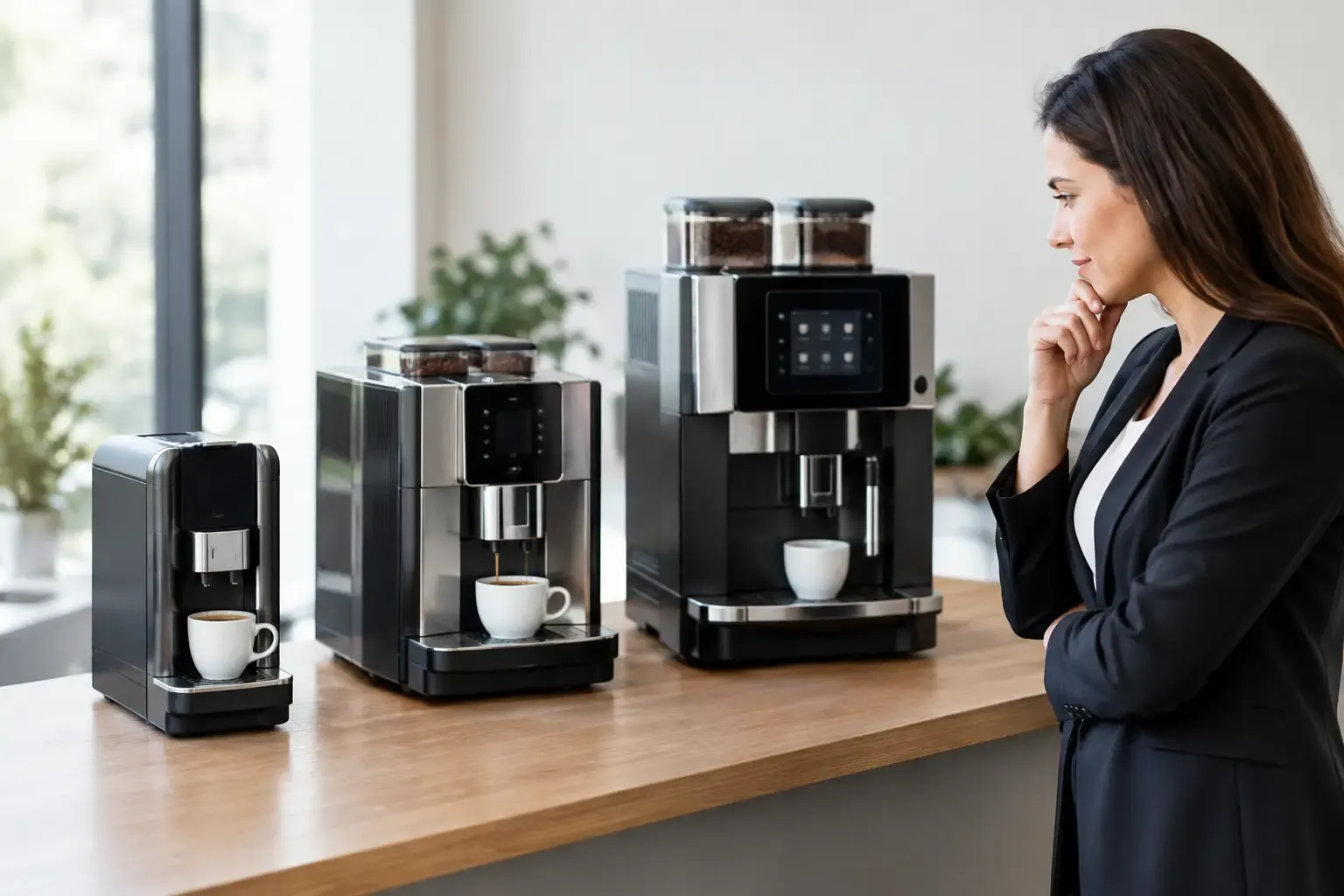
The question is not simply what coffee machine size looks right on the counter. For a workplace, it is about whether the machine can keep pace at 9am, produce the drinks your people actually order, and fit into the space without creating a daily maintenance headache. A machine that is too small soon becomes a queue. One that is too large can leave you paying for capacity and features you will rarely use.
What Coffee Machine Size Means for a Business
With commercial coffee equipment, “size” has several meanings. Physical dimensions matter, particularly in compact kitchens, reception areas and showroom refreshment points. But the more useful measure is output: how many drinks the machine can produce reliably each day and, crucially, during busy periods.
A suitable machine also needs the right-sized bean hopper, water tank or mains water connection, waste container and milk system. These parts determine how often someone needs to refill, empty or clean the machine. A compact unit may serve 30 cups a day well, but become impractical if a team of 50 all wants coffee between 8.45am and 9.15am.
For most businesses, selecting capacity before choosing a model is the sensible order. It keeps the conversation focused on the experience you want to provide, rather than a specification sheet full of features you may not need.
Start With Daily Cups, Then Check Peak Demand
Daily cup volume is the strongest starting point. Count not only employees, but also regular visitors, clients, contractors and customers. A small office with 15 people can easily use 40 to 60 drinks a day when meetings are frequent. A customer-facing showroom may have fewer staff but need a higher-capacity machine because every visitor is offered a drink.
As a practical guide, a light-use commercial machine is usually appropriate for around 20 to 50 cups per day. Mid-volume machines are commonly chosen for workplaces producing roughly 50 to 100 cups. For busy offices, hotels, cafés and high-footfall public areas, look at machines designed for 100-plus drinks per day, often with larger hoppers, mains water and more substantial milk capability.
These ranges are a guide, not a rule. The busiest 30 minutes matter as much as the total. If 25 people arrive at once and the machine delivers a milk coffee every minute, the queue will affect the experience even if the daily volume is modest. In this case, greater boiler capacity, faster milk delivery or a second machine may be better than choosing a single oversized unit.
Allow for growth and changing working patterns
Buying precisely for today’s demand can be a false economy. A business expecting to recruit, bring more people back into the office or extend its hospitality offer should leave some headroom. Choosing a machine rated just above your current requirement can reduce the risk of an early replacement.
There is a limit, though. A high-volume machine in a quiet office will take up more room, cost more and may lead to unnecessary bean wastage if stock is not managed carefully. The right allowance is normally enough to cover predictable growth and busy days, rather than planning for an unlikely maximum.
Match the Footprint to the Service Area
Before falling in love with a machine, measure the location properly. Record the width, depth and height of the counter, plus room to open bean hoppers, remove drip trays and access cleaning components. Leave working space around the machine. A coffee station needs cups, milk, sugar or stirrers, a bin and often a place for employees to set down a laptop or mug.
Countertop bean-to-cup machines are a strong fit for many offices and smaller hospitality settings because they provide fresh coffee without a dedicated barista area. However, physical size rises with capacity. Larger machines generally have bigger bean hoppers, fresh-milk fridges and waste containers, so they need a more generous counter and suitable ventilation.
Where counter space is limited, under-counter milk fridges or plumbed-in equipment can help create a tidier station. In a reception or showroom, appearance may carry equal weight to output. A premium machine with a smart finish, clear drink selection and concealed milk refrigeration can support the impression you want visitors to take away.
Choose Capacity Around the Drinks You Serve
Black coffee places relatively little demand on a machine compared with cappuccinos, lattes and flat whites. If most users choose americanos, a smaller commercial bean-to-cup machine may meet a respectable daily volume. If milk drinks make up the majority of orders, the milk system becomes central to sizing.
Fresh milk offers excellent quality and a café-style result, but it requires refrigeration, routine cleaning and enough milk storage for the rush. Machines using fresh milk often suit offices and hospitality environments where coffee is part of the employee or guest experience. For sites with lower demand, limited cleaning resource or no convenient fridge space, a powdered-milk system may be more practical.
The number of drink options also affects use. A machine offering espresso, americano and hot water can serve quickly. Add several milk recipes, hot chocolate, decaf options and custom settings, and it may attract more use than your first estimate suggests. That is often a good problem to have, provided the equipment can support it.
Bean hopper, water and waste capacity
A machine can have a headline cup rating that looks suitable while still requiring too much intervention. Check what happens between drinks. A larger bean hopper reduces topping-up during the week, while a twin hopper may be useful when offering regular and decaffeinated beans. It is not necessary for every workplace, but it can be valuable where choice matters.
Water supply is equally significant. Tank-fed machines offer flexibility and can be installed where plumbing is unavailable, but the tank needs refilling. For a busy workplace, a mains water connection usually gives a more consistent, lower-effort service. Water filtration should form part of the plan, especially in hard-water areas, as it helps protect taste and equipment performance.
Waste containers and drip trays deserve the same attention. They are easily overlooked until they fill halfway through a meeting rush. A machine with adequate grounds and wastewater capacity keeps the station working and reduces the calls on a busy office manager.
Consider Who Will Look After the Machine
The right size is also the one your team can manage confidently. Larger, more capable machines may require more regular cleaning routines, milk-system care and consumable checks. That is manageable when responsibilities are clear, but less so in a workplace where nobody formally owns the coffee area.
Look for guided cleaning programmes, clear alerts and straightforward access to daily-use parts. If your business cannot spare time for preventable downtime, ongoing maintenance support is worth considering alongside the machine itself. The lowest equipment price does not always represent the lowest operating cost when staff time, call-outs and lost service are included.
This is where a site assessment is useful. It can identify practical details that a cups-per-day figure cannot: the nearest water point, drainage options, electrical supply, counter strength, cleaning responsibilities and how people move through the space.
Rental, Lease or Purchase Changes the Sizing Decision
How you acquire the machine can make it easier to choose confidently. Buying may suit established sites with clear, stable demand and a preference for owning equipment outright. Rental or leasing can be particularly useful where team size is changing, a new site is opening or you want the option to move to a higher-capacity machine later.
Flexibility matters because coffee demand is rarely fixed. An office may expand, a hotel may enter a busier season, or a showroom may increase appointments. Full House Coffee can help businesses match machine capacity to current demand while keeping future changes practical, rather than treating the first choice as permanent.
A well-sized commercial coffee machine should disappear into the working day. Staff get good coffee without a queue, visitors receive a professional welcome, and the person responsible is not constantly refilling tanks or arranging repairs. Start with real daily demand, test it against the peak period and available space, then choose the setup your business can support comfortably. No pressure, just expert advice - and coffee that helps people get on with the day.