
 BESTIR BM50
 BESTIR BM80
 BESTIR BMC300
 Coffetek Vitro M5 MIA
 Coffetek Vitro S1
 Coffetek Vitro S1 MIA
 Coffetek Vitro X1 MIA
 Coffetek Vitro X3
 Primio Coffee Beans
 Espresso Coffee Beans
 Ultimo Coffee Beans
 Vero Coffee Beans
 Coffetek Vitro X4 ESP
 FRANKE A300 FM
 FRANKE A400
 FRANKE A600
 FRANKE A800
 Gaggia Milano LA BRILLANTE
 Gaggia Milano LA RADIOSA
 Gaggia Milano LA SOLARE
 Jura GIGA X3 GEN II
 Jura GIGA X8 - GEN II
 Jura W8 - GEN II
 Jura X10
 NECTA KALEA PLUS
 Rex-Royal S1
How to Stock Office Coffee Beans Without Waste
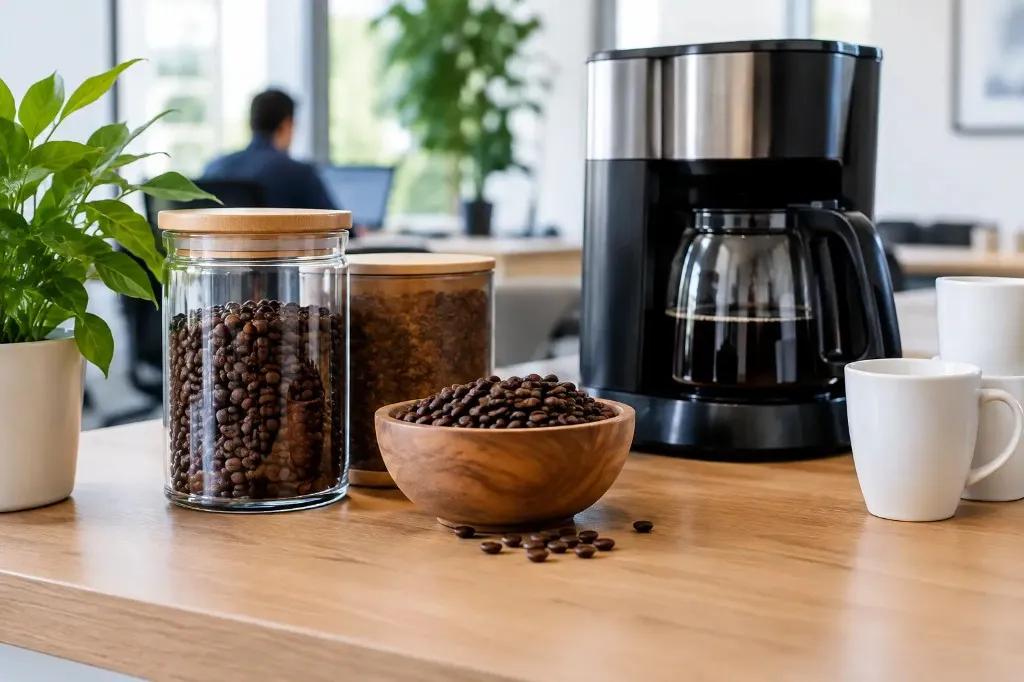
The coffee machine is ready for the morning rush. The milk is chilled, cups are stacked, and then someone finds an empty bean hopper at 10:15am. Knowing how to stock office coffee beans properly prevents that avoidable interruption while protecting the quality of every cup and the budget behind it.
For offices, showrooms, hotels and other professional workplaces, bean stock is not simply a cupboard-filling exercise. Buy too little and staff or guests face an out-of-service machine. Buy too much and beans sit past their best, taking up space and creating unnecessary waste. The right approach is based on actual consumption, delivery reliability and the coffee experience you want to provide.
Start with Daily Cup Demand, Not Bags
The number of people on site is useful, but it is not the same as the number of coffees served. A 40-person office where most people work remotely may use fewer beans than a 15-person showroom serving customers throughout the day. Hospitality sites can be busier still, particularly at breakfast, during events or over weekends.
Begin by looking at your machine's drinks counter if it has one. Record total drinks for two to four normal weeks, then divide by the number of working days. If you are installing a new machine, make a sensible estimate based on headcount, visitor numbers and workplace habits, then review it after the first month.
As a working guide, a bean-to-cup machine generally uses around 8 to 10 grams of coffee per espresso-based drink. Stronger recipes, larger drinks and certain machine settings can increase this figure. At 50 coffees per day, that equates to roughly 0.4 to 0.5kg of beans daily. A 1kg bag may therefore last around two working days, rather than a full week.
Do not forget that not every machine drink is coffee-based. Hot chocolate, tea and hot water drinks affect total machine use but do not draw from the bean hopper. The aim is to measure bean consumption specifically, not just how often people press a button.
Check Hopper Capacity, but Avoid Filling It Blindly
A large hopper can reduce day-to-day topping up, but it should not encourage overfilling. Coffee beans begin to lose their aroma after exposure to air, warmth and light. In a lower-use office, filling a large hopper to the top every Monday can mean the final drinks later in the week taste flatter than the first.
For busy locations, daily hopper filling may be entirely practical. For quieter sites, add enough beans for one or two days of expected use, then keep the rest sealed in storage. This gives staff a simple routine without leaving excessive beans exposed inside the machine.
Choose a Bean Range People Will Actually Use
Stock planning becomes complicated when a workplace carries too many varieties. A dependable house blend for the main machine will suit most organisations. Look for a well-balanced, commercially consistent bean that works across espresso, americano, cappuccino and latte recipes.
The right roast profile depends on your audience. A medium or medium-dark blend often performs well in mixed workplaces because it retains enough body to cut through milk while remaining approachable as a black coffee. A very light roast may appeal to specialty coffee enthusiasts, but it can taste sharp or underdeveloped when used with standard bean-to-cup recipes. A very dark roast may be familiar, yet it can limit flavour definition and may not suit every machine or setting.
Decaffeinated coffee is worth considering where demand is established, particularly in client-facing environments, hotels and larger offices. It does not always require a second bean hopper. Many commercial machines allow decaf to be added through a bypass chute using pre-ground coffee. This is often the most practical option where decaf demand is occasional. If decaf is popular, a dual-hopper machine or a separate grinder may be a better operational choice.
Keep seasonal or guest beans as a deliberate addition, not an accidental stock problem. A premium single-origin coffee can be a thoughtful feature for a boardroom or café, but only if it has a clear purpose and expected turnover. Every additional line adds more ordering, storage and the risk of stale stock.
Set a Sensible Stockholding Level
Most workplaces do not need months of coffee beans on site. Beans are a fresh product, and smaller, more frequent deliveries are usually better for flavour and cash flow. The exception is a site with difficult access, variable demand or a delivery schedule that cannot be relied upon at short notice.
A good starting point is to hold one to two weeks of normal bean use, plus a modest buffer. For example, if your office uses 4kg a week, keeping 5kg to 6kg in total provides breathing room without turning the storeroom into a warehouse. If deliveries arrive weekly and are dependable, the lower end of that range may be enough. If you operate a busy hotel, café or remote site, a larger buffer may be sensible.
Your reorder point should account for delivery lead time. If you use 4kg per week and it takes three working days to receive a delivery, do not wait until the final bag is open. Set the reorder point at around 2kg, then adjust once you understand real usage patterns.
A Simple Office Stock Example
Imagine a 60-person office averaging 45 coffee drinks a day. At 9 grams per drink, daily consumption is just over 400 grams. Over five working days, that is around 2kg. With a 25% buffer for meetings, visitors and busier winter months, plan for roughly 2.5kg per week.
If the supplier delivers weekly, holding 3kg to 4kg is normally a comfortable position. When stock reaches 1kg, order the next delivery. This leaves enough coffee for everyday use even if an unexpected client meeting increases demand or a delivery is delayed.
Store Beans for Freshness and Consistency
Coffee beans should be kept cool, dry and away from direct sunlight. A clean cupboard is usually ideal. Avoid placing bags beside a radiator, boiler room, dishwasher or sunny window, where heat and humidity can affect flavour.
Keep unopened bags sealed in their original packaging. Once opened, transfer any remaining beans to an airtight container only if the original bag cannot be resealed effectively. Label containers with the opening date and use older stock first. This first-in, first-out approach is simple, but it matters when several people top up the machine.
Do not store beans in a fridge or freezer for routine office use. Temperature changes can introduce condensation, and busy staff are unlikely to manage thawing correctly. Fresh deliveries, sensible quantities and proper cupboard storage are more reliable than complicated preservation methods.
It is also worth keeping the bean storage area separate from strongly scented supplies such as cleaning products. Coffee is porous and aromatic. While sealed bags provide protection, a clean, organised stock area supports better housekeeping overall.
Make Reordering Someone's Clear Responsibility
The most common cause of bean shortages is not poor forecasting. It is assuming somebody else has placed the order. Assign ownership to a named office manager, facilities contact, hospitality lead or shift manager, with cover arranged for holidays and busy periods.
A quick weekly stock check is usually enough for a standard office. Count unopened bags, estimate what remains in the current bag and check the hopper level. Record the figure in a simple spreadsheet, stock sheet or purchasing system. Over a few weeks, this creates a reliable picture of normal use and makes sudden changes easier to spot.
For sites with more than one machine, track each location separately. The machine beside the sales floor may use far more coffee than the one in a meeting suite. Combining all stock into one figure can hide a local shortage until it becomes a problem.
Plan ahead for changes in occupancy. Office attendance may rise on particular days, while trade events, open days, conferences and the Christmas period can sharply increase consumption. Ordering an extra bag or two before a known busy period is a small decision that protects the visitor experience.
Keep the Machine and the Bean Plan Aligned
Bean quality and machine performance are closely connected. Old beans, poorly adjusted grinder settings and an infrequently cleaned brew unit can all produce inconsistent coffee. If staff report weak, bitter or unusually slow drinks, do not assume the beans are the only cause. Check cleaning routines, hopper condition, grinder settings and water filtration as part of the same review.
The machine should also match the demand you are stocking for. A compact office model may be ideal for 30 cups per day but struggle when asked to produce 150 drinks for staff and visitors. Equally, an oversized machine and large bean hopper may be unnecessary in a small workplace with modest consumption. Full House Coffee can help assess expected cup volumes, available space and milk requirements, then shape a bean supply plan around the machine rather than guessing.
A well-run coffee service should feel effortless to the people using it. Keep enough fresh beans on hand, give one person ownership of replenishment and review consumption whenever your workplace changes. Then the first coffee of the day can do what it is meant to do: turn “leave me alone” into “let's get to work”.