
 BESTIR BM50
 BESTIR BM80
 BESTIR BMC300
 Coffetek Vitro M5 MIA
 Coffetek Vitro S1
 Coffetek Vitro S1 MIA
 Coffetek Vitro X1 MIA
 Coffetek Vitro X3
 Primio Coffee Beans
 Espresso Coffee Beans
 Ultimo Coffee Beans
 Vero Coffee Beans
 Coffetek Vitro X4 ESP
 FRANKE A300 FM
 FRANKE A400
 FRANKE A600
 FRANKE A800
 Gaggia Milano LA BRILLANTE
 Gaggia Milano LA RADIOSA
 Gaggia Milano LA SOLARE
 Jura GIGA X3 GEN II
 Jura GIGA X8 - GEN II
 Jura W8 - GEN II
 Jura X10
 NECTA KALEA PLUS
 Rex-Royal S1
Commercial Grinder Cleaning Guide for Businesses
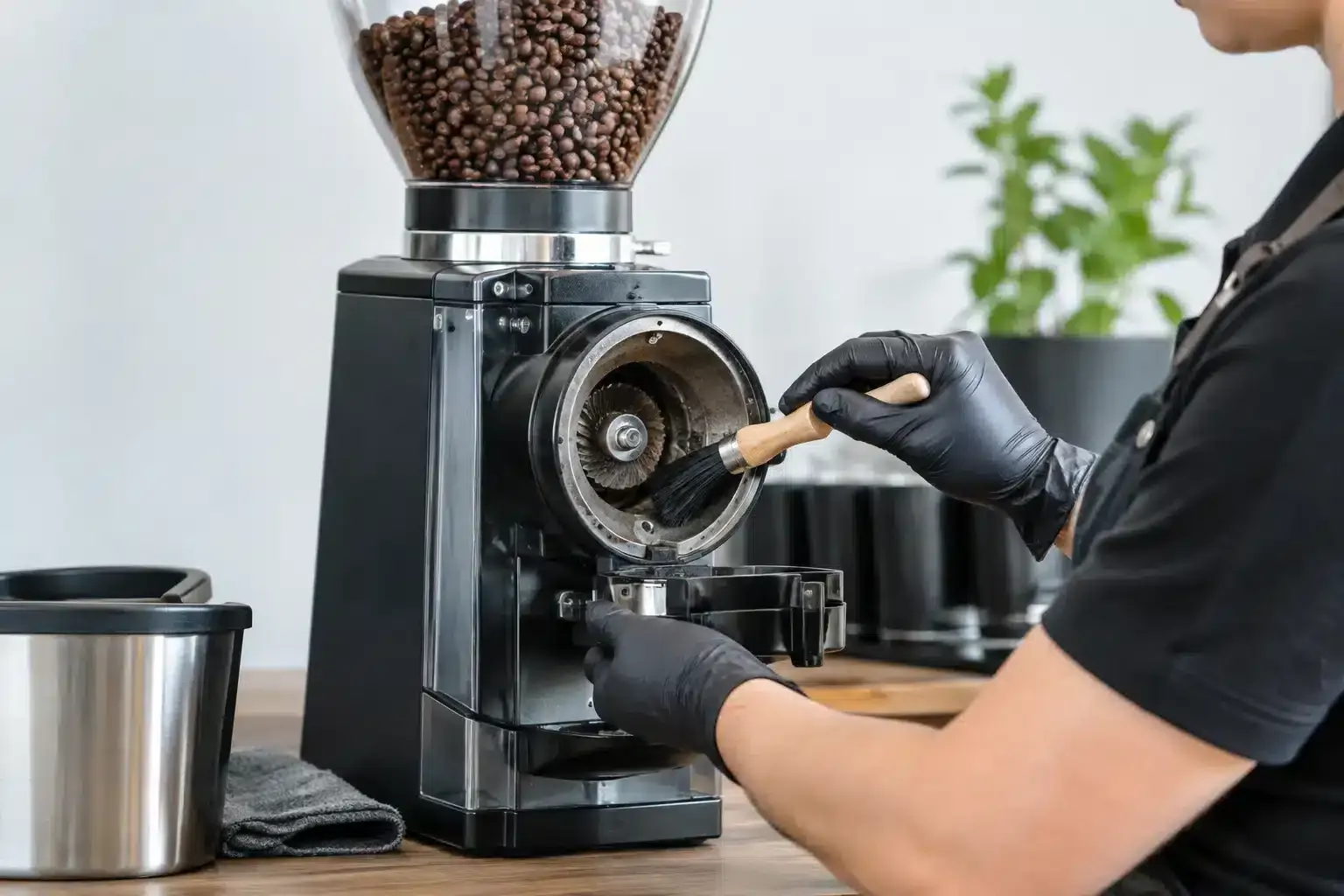
A grinder can be the hidden reason a good coffee machine starts producing flat, bitter or inconsistent drinks. Old grounds and coffee oils collect quickly in busy workplaces, particularly where a bean-to-cup machine serves dozens of cups each day. This commercial grinder cleaning guide explains what your team should clean, how often to do it, and when to involve a professional engineer.
For office managers and hospitality operators, the aim is not to add another complicated task to the day. It is to protect the coffee experience, prevent avoidable call-outs and make sure the beans you buy are being put to good use.
Why a clean commercial grinder matters
Coffee beans contain natural oils. Once ground, those oils and fine particles cling to the chute, burr chamber and dispensing area. Over time, they turn stale and can transfer a rancid, overly bitter flavour into fresh coffee. The problem may be mistaken for poor-quality beans or an issue with the machine, when the grinder simply needs attention.
Build-up can also affect consistency. A partially blocked chute may cause grounds to dispense unevenly, while residue around the burrs can make the grinder work harder. In a high-use setting, that can mean slower service, less reliable drink quality and unnecessary wear on key components.
Cleaning also supports the practical side of running a workplace coffee station. A tidy grinder area is easier for staff to use, easier to inspect and more presentable in a client-facing showroom, hotel breakfast area or office kitchen.
Know which grinder you are cleaning
The right process depends on the equipment. A standalone espresso grinder needs hands-on cleaning of its hopper, burrs, chute and grounds tray. A commercial bean-to-cup machine has an integrated grinder, often enclosed behind service panels. The daily tasks remain straightforward, but access to the burr chamber may be limited by design.
Always start with the manufacturer instructions for your model. Some machines have a programmed cleaning cycle or require approved cleaning products. Others should only be opened by a trained engineer. Using water in the wrong place, or dismantling parts unnecessarily, can cause faults that are not covered by a service agreement.
If your machine is rented, leased or covered by a maintenance plan, establish where daily user care ends and engineer maintenance begins. That division keeps responsibility clear and helps avoid downtime.
Commercial grinder cleaning guide: the daily routine
Daily cleaning should take only a few minutes and is best done at the end of service or before the first drinks of the following day. Switch the equipment off where required and allow moving parts to stop completely.
Empty and wipe the grounds tray or knock box area, then brush away loose coffee from the dispensing outlet. Use a clean, dry grinder brush or the brush supplied with the machine. A dry microfibre cloth is suitable for the exterior, touchscreen surround and hopper lid. Do not spray cleaning chemicals directly into the grinder or introduce water into the bean hopper, burr chamber or chute.
Check the hopper for old beans, especially if the site closes over a weekend or bank holiday. Beans left in a warm, bright area lose freshness more quickly and can leave more oil behind. Keeping the hopper topped up for normal service is sensible, but overfilling it late on a Friday is rarely helpful.
For bean-to-cup machines, complete the on-screen rinse and cleaning prompts when they appear. These programmes are designed to maintain the machine’s internal coffee path, but they do not remove the need to keep the accessible grinder and dispensing areas clean.
Weekly cleaning: remove oils before they affect flavour
A weekly clean goes further than a quick brush. Empty the hopper completely and store any usable beans in an airtight container away from heat and light. Remove the hopper if your model allows it, then wash it with warm water and mild detergent. Dry it fully before refitting it. Even small amounts of moisture can cause beans to stick, swell or jam inside the grinder.
With the hopper removed, use a brush or vacuum designed for food-service equipment to clear loose grounds from accessible areas. Pay attention to the hopper throat, dosing chute and any corners where powder gathers. Avoid domestic vacuum attachments that may be dirty or carry odours.
Wipe the exterior and surrounding counter at the same time. Coffee dust has a way of travelling, and a clean station makes it easier to spot leaks, loose beans or a chute that is not dispensing correctly.
In a busy café, hotel or showroom, weekly may not be frequent enough. If the grinder handles a high volume of oily dark-roast beans, or coffee quality changes noticeably through the week, increase this task to every few days. The correct schedule depends on cup volume, bean type and the grinder’s design.
Periodic burr cleaning needs care
Burrs are the cutting surfaces that grind the coffee. They need periodic cleaning to remove compacted residue, but this is where many well-meaning teams go too far. Burr alignment is critical to grind consistency. Taking apart a commercial grinder without the right tools or knowledge can lead to poor extraction, damaged threads or an incorrectly reassembled machine.
Some standalone grinders allow trained staff to remove and brush the upper burr carrier following the manufacturer’s instructions. If that is approved for your model, photograph the grind setting first, use only a dry brush and refit every part securely. Never wash burrs unless the manufacturer specifically permits it, and never use rice or improvised abrasive materials as a cleaning method.
Grinder cleaning pellets can be appropriate for certain commercial grinders. They are designed to lift oils from the burrs and internal path, then are purged out with coffee afterwards. However, they are not universal. Check compatibility first, follow the specified dosage and discard the purge coffee. For integrated bean-to-cup equipment, use only the cleaning procedure and products approved for that machine.
For most workplaces, a scheduled engineer visit is the sensible point for deeper grinder inspection. An engineer can clean areas that are not safely user-accessible, check burr condition, confirm calibration and identify signs of wear before performance drops.
Signs your grinder needs attention sooner
Do not wait for the next planned clean if staff notice a sudden change in coffee. Slow grinding, inconsistent portions, coffee dust around the outlet, a strained motor sound or a repeated grinder error message all warrant a closer look.
Taste is often the first clue. Fresh beans may start producing a harsh, burnt or stale finish even though the recipe has not changed. That can indicate residue in the coffee path, although water quality, milk cleanliness and incorrect machine settings can also be responsible. One symptom does not always point to one cause.
If the grinder jams, do not repeatedly restart it. Switch off the machine, follow the manufacturer’s guidance and contact your maintenance provider if the obstruction cannot be cleared through the approved process. Forcing a jam can turn a simple clean into a repair.
Make cleaning easy for the people using the machine
The best cleaning schedule is one a busy team can actually follow. Keep the correct brush, cloths and approved products close to the machine, but stored neatly and away from food. A short laminated checklist can help where several people share responsibility, particularly in offices with rotating facilities teams or hospitality shifts.
Assign ownership too. In a smaller office, this may be one office manager or receptionist. In a hotel or café, it may sit with the opening and closing team. Whoever is responsible should know how to record faults, when to empty beans before a closure and who to contact for support.
A good supplier should make this straightforward. Full House Coffee can help businesses match cleaning expectations to the machine, daily cup volume and support arrangement, so premium coffee does not become a maintenance burden.
Protect the grinder between cleans
Cleaning works best alongside sensible daily use. Use fresh, suitable beans rather than flavoured or coated beans, which can leave excessive residue and may damage grinder components. Keep the hopper lid on, position the machine away from direct sunlight where possible, and avoid changing grind settings while the grinder is stationary if your equipment manual advises against it.
Most importantly, treat a decline in coffee quality as useful information rather than an unavoidable part of owning a commercial machine. A quick daily brush, a proper weekly clean and timely professional support will keep the grinder quieter, cleaner and far more likely to deliver the coffee your colleagues and customers expect.