
 BESTIR BM50
 BESTIR BM80
 BESTIR BMC300
 Coffetek Vitro M5 MIA
 Coffetek Vitro S1
 Coffetek Vitro S1 MIA
 Coffetek Vitro X1 MIA
 Coffetek Vitro X3
 Primio Coffee Beans
 Espresso Coffee Beans
 Ultimo Coffee Beans
 Vero Coffee Beans
 Coffetek Vitro X4 ESP
 FRANKE A300 FM
 FRANKE A400
 FRANKE A600
 FRANKE A800
 Gaggia Milano LA BRILLANTE
 Gaggia Milano LA RADIOSA
 Gaggia Milano LA SOLARE
 Jura GIGA X3 GEN II
 Jura GIGA X8 - GEN II
 Jura W8 - GEN II
 Jura X10
 NECTA KALEA PLUS
 Rex-Royal S1
How to Clean Commercial Machines Properly
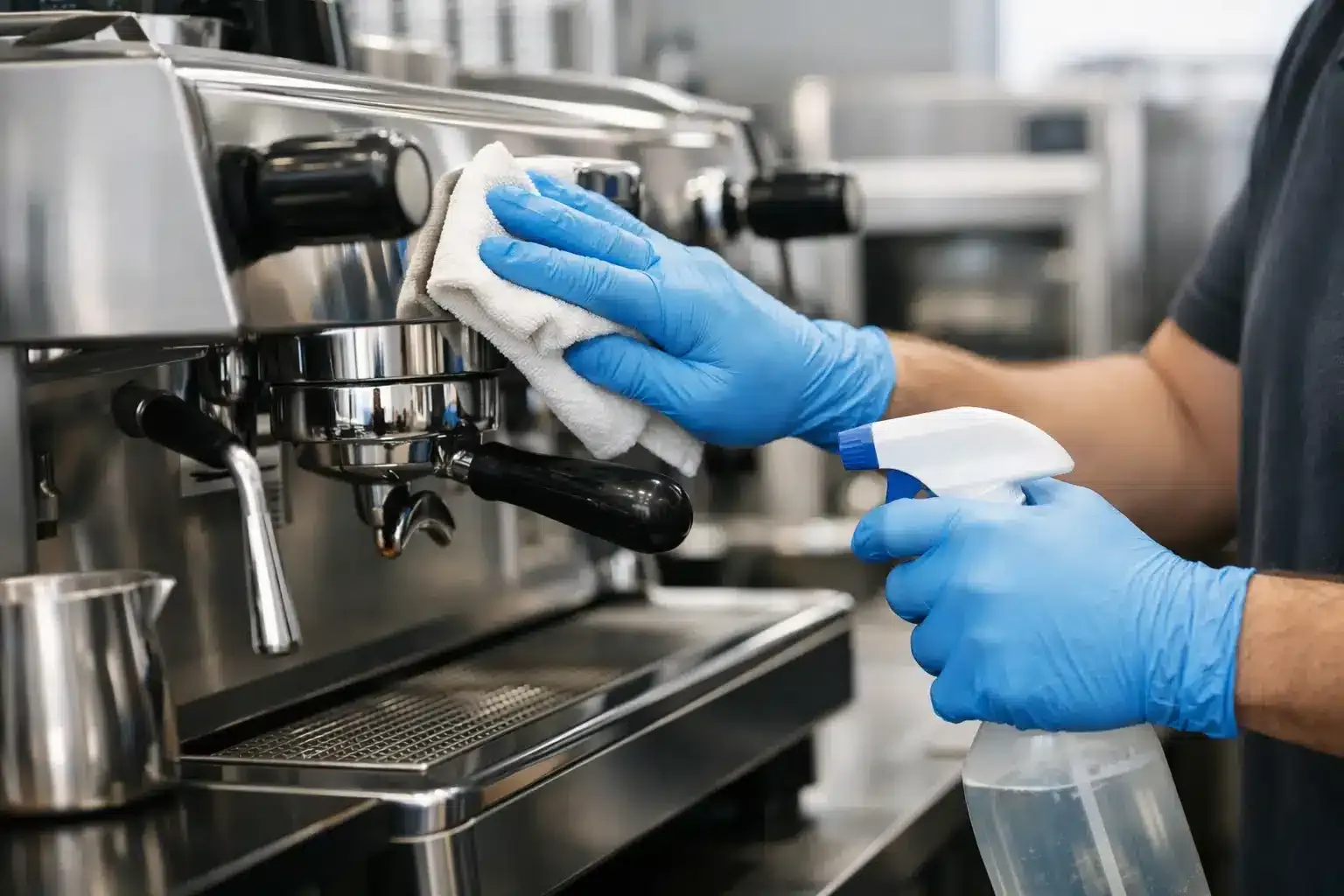
The first sour espresso, lukewarm latte or milk-system warning is rarely a machine problem alone. It is often the result of a cleaning task being missed during a busy shift. Knowing how to clean commercial machines properly protects coffee quality, keeps staff and guests safe, and helps avoid preventable call-outs.
For bean-to-cup and fresh milk coffee machines, cleaning is not a cosmetic extra. Coffee oils build up in brew units and outlets, milk residue can harbour bacteria, and limescale restricts water flow and affects temperature. A clear routine, matched to the machine and its daily cup volume, is the simplest way to keep a professional coffee service dependable.
How to clean commercial coffee machines without guesswork
Start with the machine manufacturer’s instructions. Commercial models vary considerably: some run guided rinse and cleaning programmes from the touchscreen; others have removable brew groups, milk lines or drip trays that need manual attention. Never substitute the recommended cleaning tablets, milk cleaner or descaling products unless the manufacturer has confirmed they are suitable. The wrong chemical can damage seals, sensors and internal components, and may affect warranty cover.
Before cleaning, make sure the person responsible knows whether the machine has an automatic cleaning cycle, a plumbed-in water supply and a fresh milk fridge or cooler. Switch the machine into its cleaning mode where required, keep hands clear of hot outlets, and use clean food-safe containers. This is particularly relevant in offices and hospitality settings where several people may use the machine but nobody has sole responsibility for it.
A good routine has two parts. The automated cycle cleans areas inside the machine that staff cannot safely reach. Manual cleaning deals with the surfaces, trays, milk components and waste areas where spills and residue collect. One does not replace the other.
Clean the milk system every day
Fresh milk machines need the most consistent attention. Milk should not be left in lines overnight, even if the machine has a rinse function. At the end of service, empty any remaining milk from the container, follow the programmed milk-cleaning cycle using the approved milk-system cleaner, then rinse components thoroughly where instructed.
Remove and wash the milk tube, connector, container and lid according to the manufacturer’s guidance. Allow them to air-dry on a clean surface rather than wiping the inside with a cloth. A cloth can transfer residue or fibres back into the parts. If your machine uses a milk fridge, wipe internal spills promptly and check that it is holding the correct temperature.
This is not a job to postpone until the next morning. Overnight residue is harder to remove and can spoil the flavour of every drink served afterwards. For high-use café, hotel or showroom machines, a mid-day rinse may also be worthwhile, particularly during warm weather or long opening hours.
Run the coffee cleaning programme as scheduled
Coffee grounds and natural oils accumulate around the brewer, valves and dispensing spouts. Most commercial bean-to-cup machines will prompt users to run a cleaning cycle after a set number of drinks or at the end of the day. Follow that prompt rather than clearing it and carrying on.
The process usually involves emptying the drip tray and coffee grounds container, placing a cleaning tablet into the specified chamber, and letting the machine complete its programme. Do not interrupt it unless there is a safety issue. Once complete, make a rinse drink if the manufacturer recommends one before returning the machine to service.
Wipe the coffee outlet with a damp, clean cloth after the cycle. Pay attention to the underside of dual spouts, where dried coffee can affect the appearance and taste of the next drink. Avoid spraying cleaning fluid directly into buttons, screens or ventilation openings.
Empty the parts that cause most mess
The drip tray, grounds container and waste-water areas are easy to overlook because they are hidden behind the machine front. Yet they are where standing water, mould and unpleasant odours can develop. Empty the grounds container daily, even if it is not full, and wash it with warm water and mild detergent before drying it fully.
Clean the drip tray and grille at the same time. Check that drainage holes are clear and that the float, if fitted, moves freely. For machines connected to a waste pipe, inspect the surrounding area for slow draining, leaks or coffee grounds that may have been tipped into the wrong place.
Wipe the exterior properly
A premium coffee machine is part of the workplace or customer experience. Fingerprints on the screen, dried milk on the spout and coffee splashes on a polished finish make even excellent coffee feel less considered.
Use a soft damp microfibre cloth for the casing, display surround and bean hopper exterior. Dry stainless steel surfaces afterwards to reduce water marks. Do not use abrasive pads, bleach, scouring powder or strong degreasers. They can scratch finishes, fade labels and damage seals around touchscreens.
A cleaning schedule that staff will actually follow
The best schedule is the one that fits your operation. An office machine serving 30 cups a day needs a different approach from a hotel breakfast machine producing several hundred. However, most commercial coffee setups benefit from this practical baseline:
- At the end of each day: run the prompted coffee clean, clean the milk system, empty and wash the drip tray and grounds container, and wipe touchpoints and outlets.
- Each week: remove and wash permitted detachable parts, clean the bean hopper exterior, inspect milk tubes for wear and clean around the machine base and ventilation areas.
- Each month: review water-filter status, inspect seals and connectors, and check whether the machine’s cleaning records show missed cycles or recurring warnings.
- At the manufacturer’s interval: replace filters, complete descaling if the machine requires it, and arrange a professional service where included in your maintenance plan.
Assign ownership rather than relying on a general instruction to “keep it clean”. In a smaller office, this might sit with the office manager or a nominated team member. In a café, hotel or busy showroom, include it in the opening and closing checklist, with a manager checking that cleaning cycles have been completed.
A visible log is useful for shared workplaces. It does not need to be complicated: record the date, the task completed, any warning message and the initials of the person who carried it out. This makes it easier to spot patterns before a minor issue becomes downtime.
Descaling is not the same as daily cleaning
Daily cleaning removes coffee oils and milk residue. Descaling removes mineral deposits from water pathways. Both matter, but they are not interchangeable.
Whether descaling is needed often depends on local water hardness, the machine’s water filter and whether it is plumbed in or manually filled. Many modern commercial machines monitor this and issue a prompt. If your equipment uses a filtration system, replacing the filter on time can reduce the need for descaling and support more consistent flavour.
Do not ignore a descale warning because the machine still appears to work. Limescale can make boilers less efficient, reduce flow rates and lead to temperature instability. On some machines, an incorrect descale process can cause damage, so use the approved product and programme or ask your supplier to advise.
When cleaning will not solve the problem
Cleaning resolves many issues, but not every fault. A machine may need technical attention if it repeatedly fails to complete its cleaning cycle, leaks internally, produces unusually weak or cold drinks after cleaning, displays the same error message, or has cracked milk parts and worn seals.
Equally, avoid dismantling panels or internal components to investigate. Commercial coffee machines combine hot water, electricity and sensitive moving parts. A quick fix can turn a straightforward service visit into a larger repair.
For businesses with high demand, maintenance cover is often a sensible operational choice rather than an unnecessary extra. It gives staff a clear route when cleaning and routine checks are not enough, while helping protect the investment in the machine and the experience it delivers.
Make good cleaning part of good coffee service
A machine that is easy to clean is usually easier to manage day to day. When selecting equipment, ask how long the daily cycle takes, which parts are removable, how milk is handled, whether staff receive cleaning guidance and what happens if a fault occurs. These details matter as much as cup capacity and bean hopper size.
Full House Coffee helps businesses match commercial coffee machines to their expected demand, available space and preferred level of support, so the daily routine remains practical rather than another job that gets missed. Good coffee should keep people moving. A simple, consistent cleaning routine helps make sure the machine behind it does too.