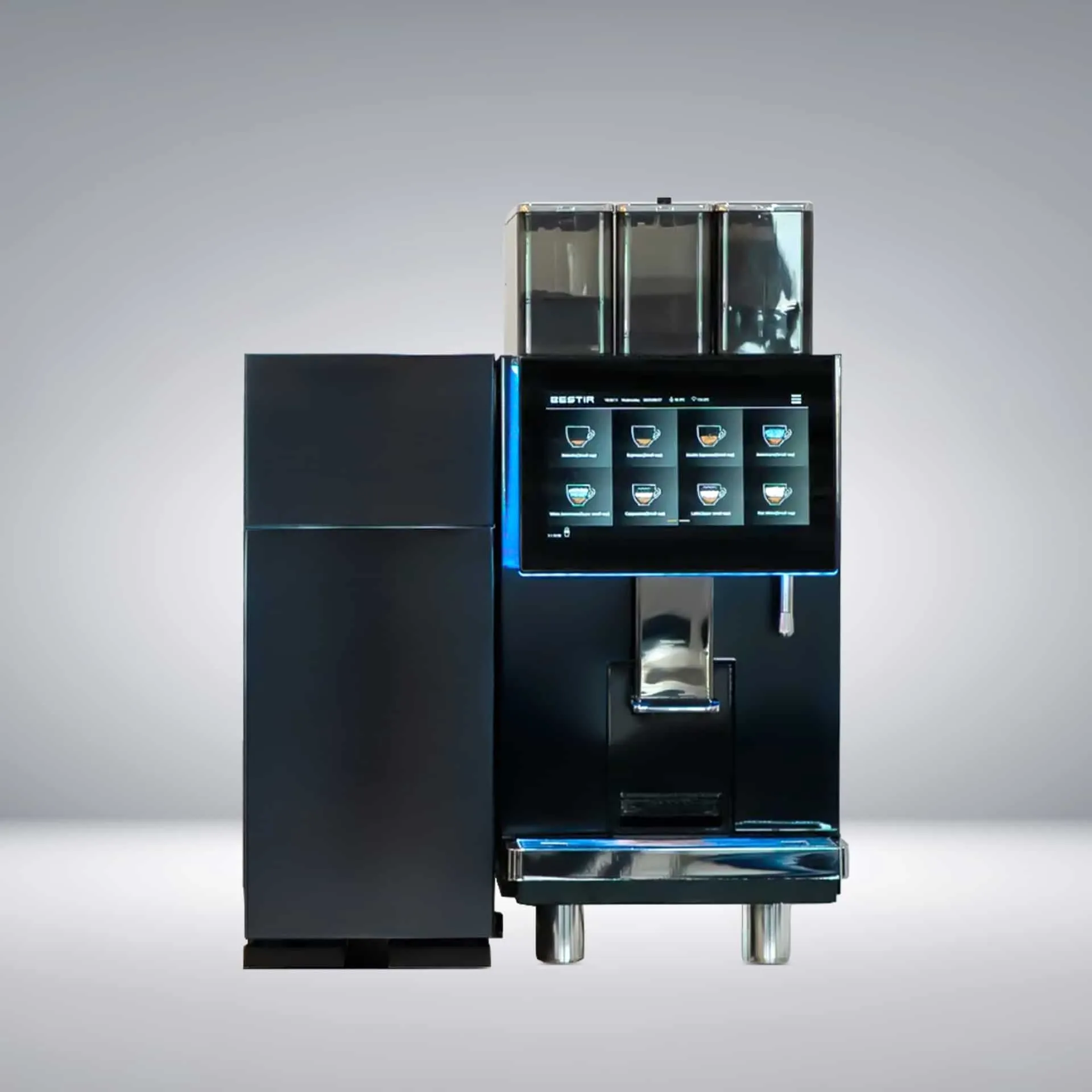
 BESTIR BM50
 BESTIR BM80
 BESTIR BMC300
 Coffetek Vitro M5 MIA
 Coffetek Vitro S1
 Coffetek Vitro S1 MIA
 Coffetek Vitro X1 MIA
 Coffetek Vitro X3
 Primio Coffee Beans
 Espresso Coffee Beans
 Ultimo Coffee Beans
 Vero Coffee Beans
 Coffetek Vitro X4 ESP
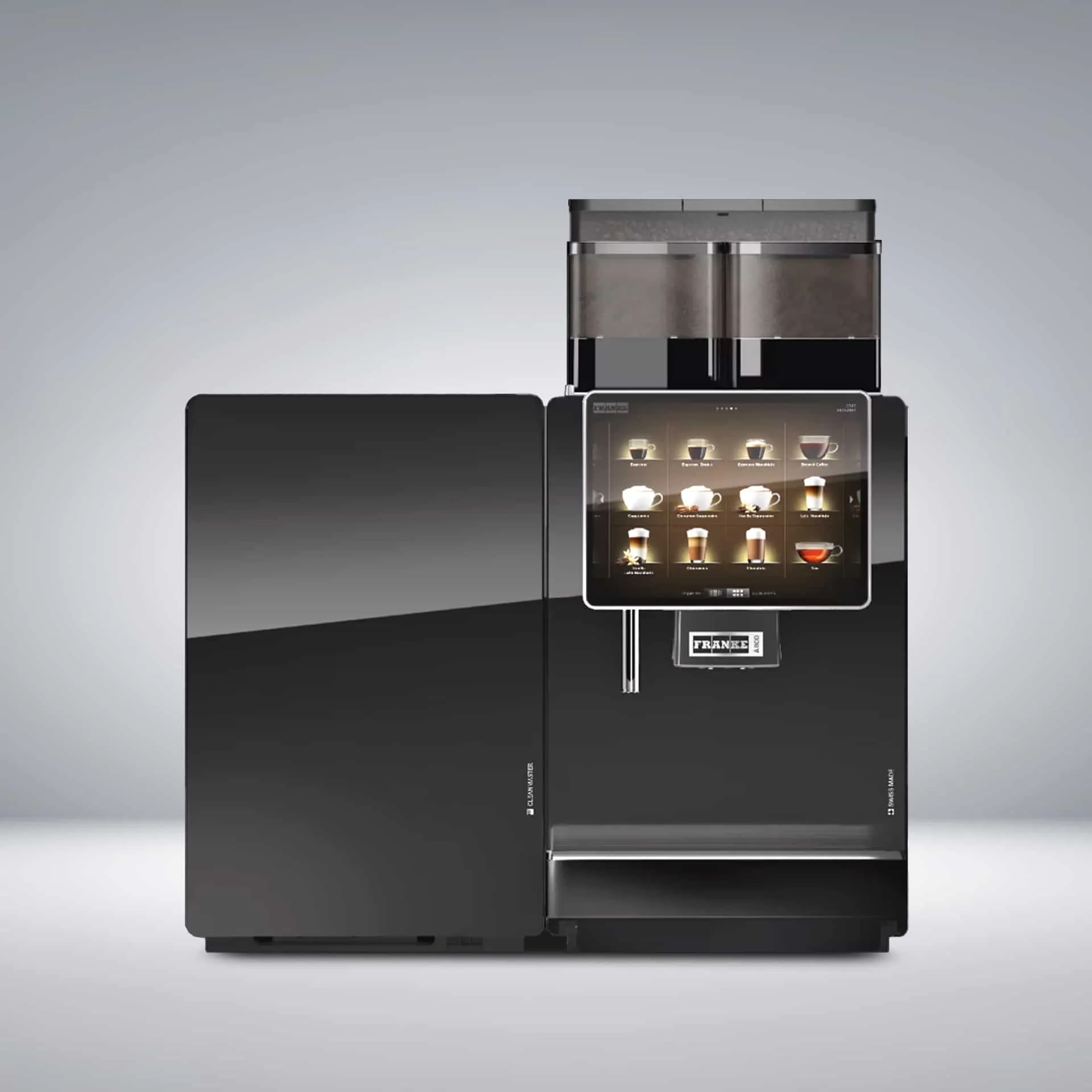
 FRANKE A300 FM
 FRANKE A400
 FRANKE A600
 FRANKE A800
 Gaggia Milano LA BRILLANTE
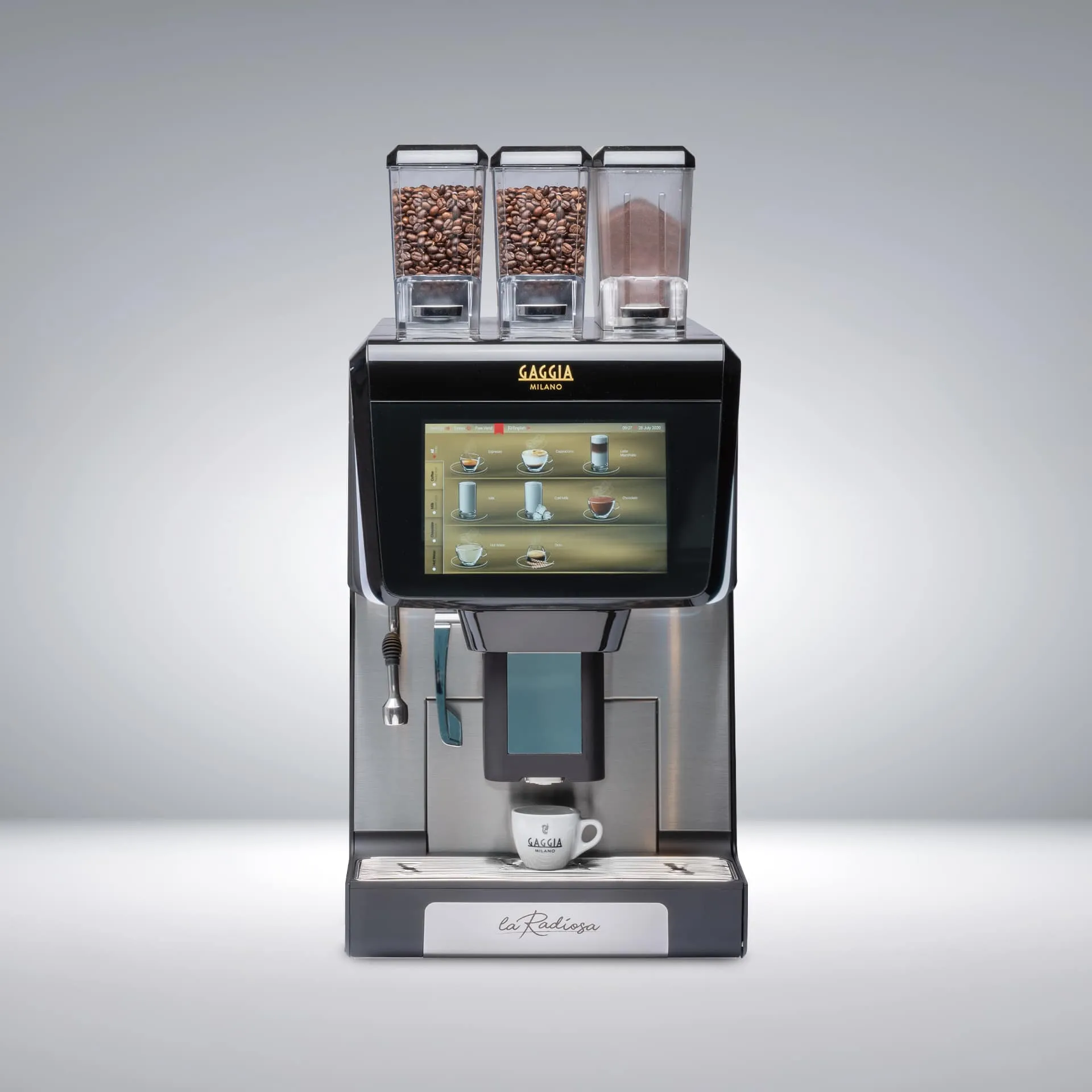
 Gaggia Milano LA RADIOSA
 Gaggia Milano LA SOLARE
 Jura GIGA X3 GEN II
 Jura GIGA X8 - GEN II
 Jura W8 - GEN II
 Jura X10
 NECTA KALEA PLUS
 Rex-Royal S1
How to Choose Café Coffee Equipment Well
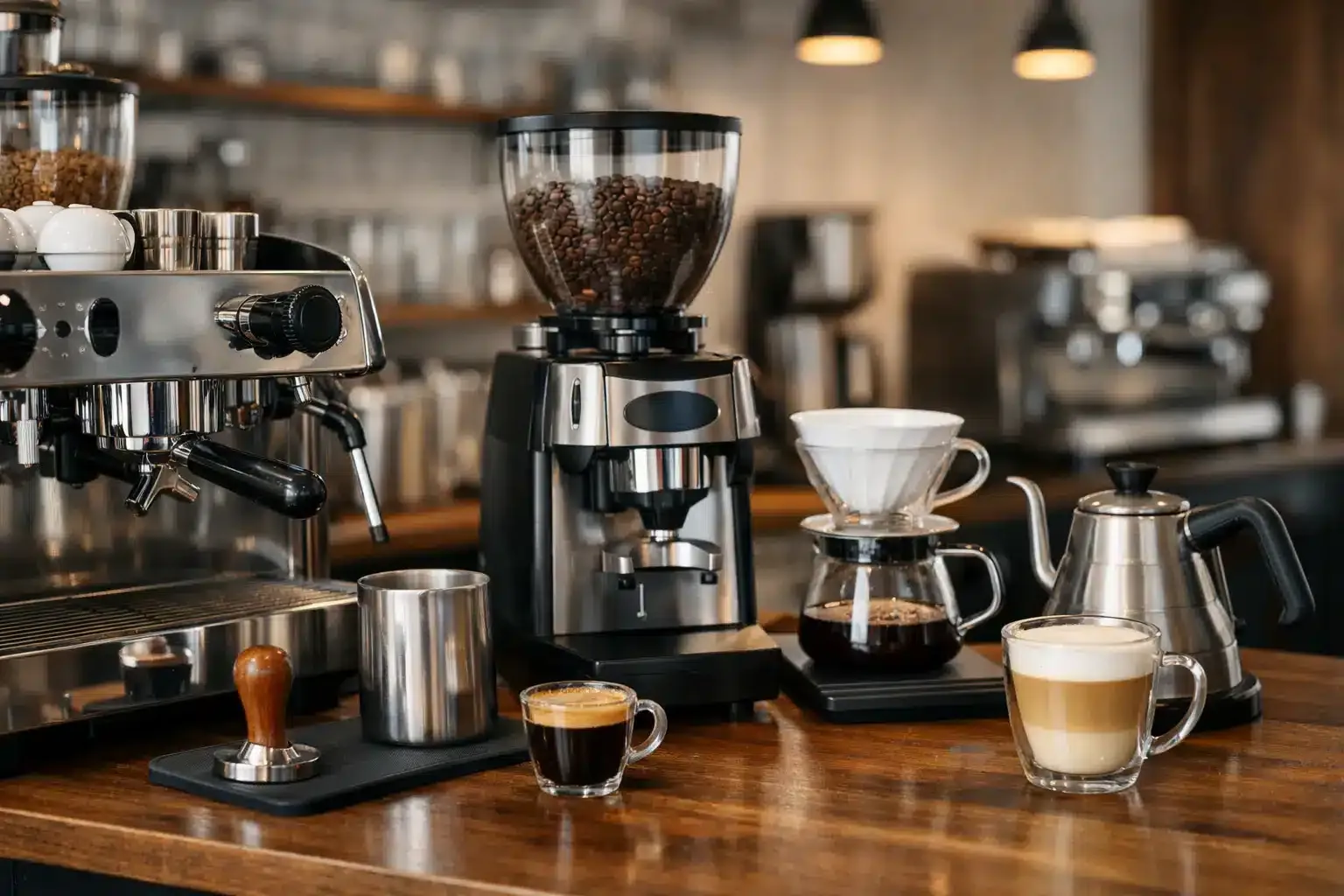
A queue at 10.15am is where a café coffee machine earns its keep. The equipment may look excellent on the counter, but if it cannot keep pace with the morning rush, produces inconsistent milk texture or leaves staff tied up cleaning when they should be serving, it is costing more than it saves. Knowing how to choose café coffee equipment starts with the reality of your service, not a spec sheet.
The right setup should suit your menu, team, peak demand and premises while giving customers a coffee worth coming back for. It also needs to be practical to clean, reliable through busy periods and supported when something goes wrong.
Start with your café service model
Before comparing machines, define what a normal day actually looks like. A compact neighbourhood café serving 80 drinks daily has very different needs from a hotel lounge, showroom café or transport hub serving the same number in short, intense bursts.
Look at your expected daily cup volume, then identify the busiest 30 to 60 minutes. A machine rated for 150 cups a day may be perfectly suitable for a steady flow, yet struggle if half that volume is ordered between 8.30am and 10am. Peak output, not just the daily total, should shape your decision.
Your menu matters just as much. An espresso-led offer with flat whites, cappuccinos and lattes requires a capable espresso system and a milk workflow that does not hold up the queue. If filter coffee is a meaningful part of trade, batch brewing can take pressure off the espresso machine and give customers a fast, profitable alternative. If you offer decaffeinated coffee or a second single-origin option, consider whether a second grinder or dual-hopper bean-to-cup machine is required.
Staffing is the other decisive factor. A trained barista can get the best from a traditional espresso machine, dialling in grinders and steaming milk to order. A bean-to-cup machine makes greater sense where staff need to serve quality coffee consistently alongside other duties, or where barista training and retention are ongoing challenges.
How to choose café coffee equipment for your trade
There is no single best type of commercial machine. There is only the best fit for the way your café operates.
Traditional espresso machines
A traditional machine puts the barista at the centre of the coffee experience. It offers control over extraction, milk texture and presentation, and it is often the natural choice for independent cafés where customers expect a crafted, speciality-style drink.
The trade-off is expertise and labour. You will need a commercial grinder, staff training, daily dialling-in, cleaning routines and enough barista capacity during busy periods. Choose the number of groups carefully: a two-group machine suits many smaller cafés, while high-volume operations may need three groups or more. More groups increase output, but they also demand additional counter space, power and budget.
Bean-to-cup machines
Commercial bean-to-cup machines grind fresh beans and dispense espresso-based drinks at the touch of a button. They are well suited to self-service areas, cafés with mixed-experience staff, hotel breakfast spaces and customer-facing workplaces where speed and consistency matter.
For cafés, look beyond the drinks menu on the screen. Check the recommended daily output, brewing capacity, bean hopper size, waste capacity and cleaning process. Fresh milk systems generally give the best result for milk-based drinks, although they require a proper daily cleaning routine and suitable refrigeration. Powder milk options can simplify operation, but may not meet the quality expectations of a premium café offer.
Batch brewers and filter systems
Filter coffee deserves a place in many café plans, particularly where customers want a quick takeaway drink or where breakfast trade is high. A quality batch brewer can produce larger volumes efficiently and reduce queues at the espresso machine.
It is not a replacement for espresso, but it can be a useful addition. The key is maintaining freshness: brew sensible batch sizes, use insulated servers where appropriate and set clear holding times so coffee is never left sitting for too long.
Match capacity to the rush, not the brochure
Manufacturers' cup-per-day figures are useful, but they are only the starting point. Ask how quickly the machine can produce consecutive drinks, whether it can make coffee and steam milk at the same time, and how often staff must refill beans, water or milk.
A machine with a large advertised output can still create bottlenecks if its milk fridge is too small, its waste drawer fills during breakfast or its boiler recovery cannot keep up with repeated steaming. Conversely, buying substantially more capacity than you need can tie up capital and increase energy use without improving service.
For a traditional setup, consider the grinder as seriously as the espresso machine. A poor or underpowered grinder will make it difficult to achieve consistent shots, especially during a rush. For bean-to-cup, ask about drink-to-drink speed and whether the machine can prepare two coffees at once.
Plan the installation before choosing the machine
Many equipment decisions become expensive because the site is considered too late. Measure the counter depth, height clearance and access route into the building, including doors, lifts and tight turns. Leave working room for grinders, knock boxes, milk fridges, cups and cleaning tasks rather than measuring only the machine footprint.
A plumbed-in water supply is usually the most practical option for a commercial café. It reduces staff intervention and supports consistent service, but water quality must be assessed. The correct filtration helps protect the machine from scale, improves taste and supports warranty requirements. In hard-water areas, this is especially important.
Check the available electrical supply early. Larger traditional machines and some high-output bean-to-cup models may need a higher-rated supply than a standard plug socket. Drainage requirements, ventilation, refrigeration space and a nearby handwashing area may also influence the final layout.
A site assessment is not an unnecessary extra. It is the simplest way to avoid selecting a machine that is ideal in theory but awkward, costly or unsafe to install.
Treat milk as an operational decision
Milk drinks often account for the majority of café orders, so the milk setup deserves more thought than it usually receives. Fresh milk offers the texture and flavour customers expect from a premium latte or flat white, whether it is steamed by a barista or managed through a fresh-milk bean-to-cup system.
Consider how many milk types you will stock and how staff will keep them separate. Oat, soya and dairy alternatives can add complexity at busy times, particularly where allergen procedures are strict. A café with a broad plant-based menu may need dedicated jugs, clear workflow rules and enough fridge capacity to avoid repeated trips to storage.
If speed is your priority, simplify the menu where possible. A smaller, well-executed drinks list is often more profitable and more dependable than a long menu that slows down every order.
Budget for ownership, not only the machine price
A lower purchase price can be appealing, but it does not show the whole commercial picture. Include installation, water filtration, grinders, refrigeration, cleaning products, training, electricity, servicing and the cost of downtime in your comparison.
Buying may suit an established café that wants to own its assets and has capital available. Leasing or rental can spread costs, preserve cash flow and make it easier to move into a higher-specification machine. Flexible agreements can also be valuable if your trade is growing, seasonal or not yet proven.
Ask what is included in any support arrangement. Preventative maintenance, call-out response, replacement parts, planned filter changes and user training all affect your real operating cost. A machine that sits out of service on a Saturday morning can damage revenue and customer confidence far more quickly than a modest difference in monthly payments.
Make servicing and cleaning part of the specification
Every commercial coffee machine needs daily care. The best equipment is not necessarily the one with the fewest cleaning tasks, but the one your team can complete correctly every day. Check how long end-of-day cleaning takes, whether the machine prompts users through the process and who is responsible for milk-system hygiene.
For traditional equipment, staff should be confident backflushing group heads, purging steam wands, cleaning grinders and monitoring extraction. For bean-to-cup machines, establish clear ownership of milk cleaning, emptying waste, refilling consumables and completing prompted rinse cycles.
Reliable support should be considered before installation, not after a fault. At Full House Coffee, the approach is no pressure, just expert advice: matching commercial equipment to volume, space and budget, then helping businesses keep it working as trade changes.
The most useful next step is to map one busy hour in your café: count drinks, note the milk mix, watch where staff wait and measure the space they actually use. Those details will tell you far more about the right coffee equipment than the most impressive showroom display.