 BESTIR BM50
 BESTIR BM80
 BESTIR BMC300
 Coffetek Vitro M5 MIA
 Coffetek Vitro S1
 Coffetek Vitro S1 MIA
 Coffetek Vitro X1 MIA
 Coffetek Vitro X3
 Primio Coffee Beans
 Espresso Coffee Beans
 Ultimo Coffee Beans
 Vero Coffee Beans
 Coffetek Vitro X4 ESP
 FRANKE A300 FM
 FRANKE A400
 FRANKE A600
 FRANKE A800
 Gaggia Milano LA BRILLANTE
 Gaggia Milano LA RADIOSA
 Gaggia Milano LA SOLARE
 Jura GIGA X3 GEN II
 Jura GIGA X8 - GEN II
 Jura W8 - GEN II
 Jura X10
 NECTA KALEA PLUS
 Rex-Royal S1
Workplace Coffee Setup Guide for UK Businesses
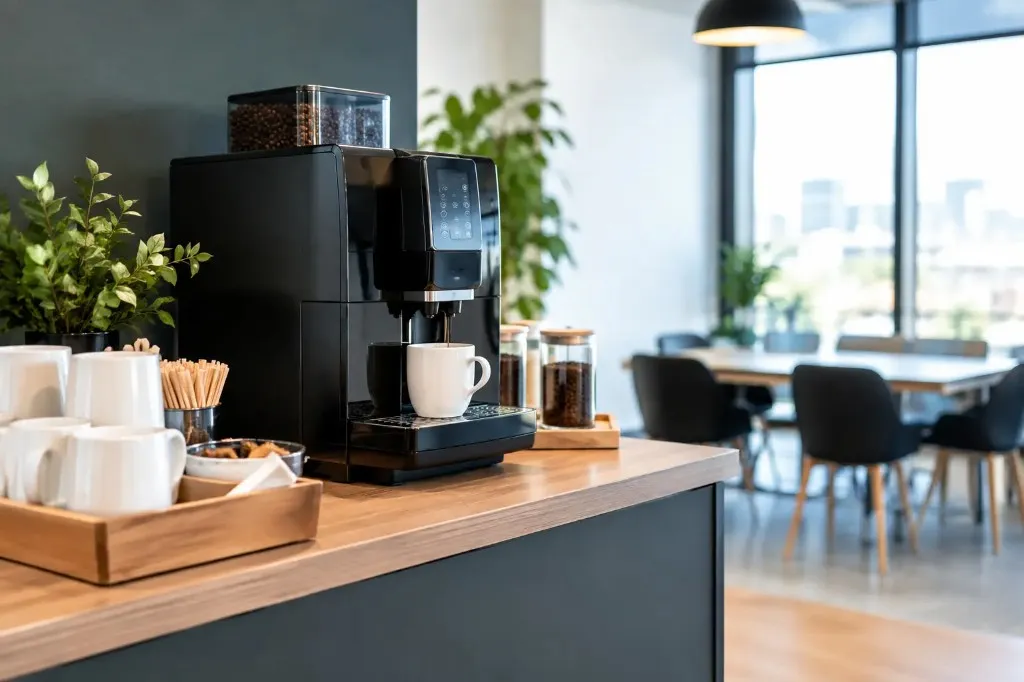
The first coffee queue of the morning tells you more about your workplace than a spreadsheet ever will. If staff are waiting, the machine is temperamental, or the coffee feels like an afterthought, it affects the start of the working day. This workplace coffee setup guide is designed to help UK businesses make a practical, commercially sound choice - without paying for capacity, features or servicing they do not need.
A good setup is not simply a matter of choosing a premium machine. It is about matching coffee demand, available space, water and power access, milk preference, budget and the level of support your team needs. Get those details right and coffee becomes one less operational issue to manage.
Start with demand, not the machine
The most common mistake is selecting a machine based on how it looks or the headline price. A compact machine may suit a team of 15 perfectly, but struggle when 60 people arrive between 8.30 and 9.15am. Equally, a high-output commercial system can be unnecessary in a small office where coffee is a valued perk rather than a constant service.
Begin by estimating daily cups, then consider when those cups are made. A workplace serving 80 drinks a day may need more capacity than one serving 120 if most demand lands in two short breaks. Reception areas, showrooms, hotels and client-facing spaces also need to account for guests, whose experience matters just as much as staff convenience.
As a useful starting point, consider four operational questions:
- How many people use the machine on a typical working day?
- What is the likely cup volume, including visitors and meeting-room use?
- Will demand be spread through the day or concentrated at peak times?
- Are espresso, americano and milk-based drinks all expected as standard?
These answers help determine the required boiler capacity, bean hopper size, waste capacity and drink speed. They also prevent a false economy: an underpowered machine can lead to queues, extra cleaning, avoidable call-outs and an unhappy team.
Choose the right workplace coffee setup
For many offices, a commercial bean-to-cup machine is the most straightforward option. It grinds fresh beans for each drink, produces a consistent result and gives users a choice of café-style drinks without requiring barista training. The right specification depends on the environment and the drinks you want to serve.
Fresh milk or powdered milk?
Fresh milk systems produce the closest result to a coffee-shop latte, cappuccino or flat white. They are well suited to workplaces where coffee quality is a visible part of the employee or customer experience. They do, however, require appropriate daily cleaning and a practical plan for storing and replenishing milk.
Powdered milk machines can be a sensible choice in busy or lightly managed environments. They simplify day-to-day operation, reduce refrigeration requirements and can be easier to maintain across multiple locations. The trade-off is that fresh milk usually delivers a more premium texture and taste.
There is no universally correct answer. A boardroom, showroom or hotel lounge may justify fresh milk for the finish it gives each drink. A warehouse office, shared workspace or high-volume staff area may place greater value on speed and simplicity.
Tank-fed or plumbed-in?
A tank-fed machine offers flexibility. It can be positioned where there is power and suitable counter space, making it useful for smaller offices or sites where plumbing is impractical. Someone will need to monitor and refill the water tank, particularly at busier times.
A plumbed-in machine connects directly to the mains water supply, usually alongside a suitable filtration system. This is often the better route for higher-volume sites because it reduces interruptions and supports a more consistent workflow. Installation can involve more planning, so a site assessment is worthwhile before making a decision.
Do not overlook the details users notice
Drink menus matter, but reliability and ease of use matter more. Look at how easily staff can select a drink, refill beans, empty grounds and complete daily cleaning. A touchscreen may be useful in a guest-facing setting, while simple button-led controls can be ideal in a practical staff kitchen.
Also consider cup clearance. If your team uses reusable travel cups, the machine needs enough space beneath the spout. It is a small detail that can quickly become an irritation when overlooked.
Plan the space around the machine
The coffee point needs to work as a small service area, not just a machine placed on a counter. Allow room for beans, cups, lids if required, milk, cleaning materials and waste. If the machine uses fresh milk, make sure the fridge or milk cooler is close enough to be practical without cluttering the area.
Think about traffic flow too. A coffee point beside a main walkway can create congestion during busy periods. In contrast, placing it in a tucked-away corner may discourage use or make it difficult for facilities staff to keep clean and stocked. The best position is accessible, visible and close to the utilities needed for dependable operation.
Noise is another consideration. Commercial grinders are not excessively loud, but they are noticeable in a quiet open-plan office or near meeting rooms. If the machine will serve a client lounge, showroom or reception, choose a location that supports a welcoming atmosphere rather than competing with conversations.
Build coffee quality into the budget
A premium machine cannot compensate for poor beans. Freshly roasted coffee, stored correctly and matched to the drink menu, has a direct impact on whether employees and visitors actually enjoy the experience. For most professional workplaces, a balanced blend with broad appeal is the safest starting point: smooth enough for milk drinks, with enough character to stand up in an americano or espresso.
Bean supply should be planned alongside equipment, not treated as an afterthought. Estimate usage based on cup volume, then set a replenishment rhythm that avoids last-minute buying. Different teams often drink different amounts across the month, so it helps to review actual consumption after the first few weeks and adjust orders accordingly.
Budgeting also means looking beyond the purchase price. Consider installation, water filtration, consumables, coffee beans, milk, cleaning products and maintenance. A lower-cost machine can become expensive if it needs frequent attention or does not suit the site. A rental or lease arrangement may make more sense for businesses that want predictable monthly costs, while purchasing can suit operators with established requirements and capital available.
Make cleaning and maintenance part of the decision
Every coffee machine needs care. The question is whether that care fits comfortably into your team’s routine. Daily tasks generally include emptying the drip tray and grounds container, rinsing milk components where applicable and completing the machine’s prompted cleaning cycle. These jobs protect drink quality as well as hygiene.
Maintenance support is particularly valuable where there is no dedicated facilities team, where the machine is central to a customer-facing experience, or where downtime would cause disruption. A clear support arrangement should set out what is covered, how faults are reported and what happens if a machine needs repair or replacement.
Water quality deserves attention too. Limescale can affect both performance and flavour, especially in hard-water areas. Suitable filtration helps protect the machine, supports consistent coffee and can reduce avoidable maintenance issues. It is a practical investment, not an optional extra.
Keep room to change as the business changes
Your coffee requirement is rarely fixed. Headcount grows, office attendance patterns shift, and a once-quiet reception may become a busy client space. A setup that suits the business now should not trap it in a poor fit later.
That is why a consultative approach matters. Full House Coffee helps businesses assess their site, expected cup volume, milk requirements and budget before recommending a suitable commercial machine and support option. No pressure, just expert advice that accounts for what the coffee point must deliver day after day.
A flexible agreement can also be useful when operational needs are still evolving. The ability to upgrade capacity, change machine type or adjust bean supply gives facilities and procurement teams more control than a one-size-fits-all purchase decision.
The best workplace coffee setup does not demand attention once it is installed. It gives people a drink they look forward to, keeps the kitchen or customer area moving, and lets the person responsible for it get on with the rest of their job. Coffee has been turning “leave me alone” into “let’s get to work” since forever. Your setup should make that feel effortless.