 BESTIR BM50
 BESTIR BM80
 BESTIR BMC300
 Coffetek Vitro M5 MIA
 Coffetek Vitro S1
 Coffetek Vitro S1 MIA
 Coffetek Vitro X1 MIA
 Coffetek Vitro X3
 Primio Coffee Beans
 Espresso Coffee Beans
 Ultimo Coffee Beans
 Vero Coffee Beans
 Coffetek Vitro X4 ESP
 FRANKE A300 FM
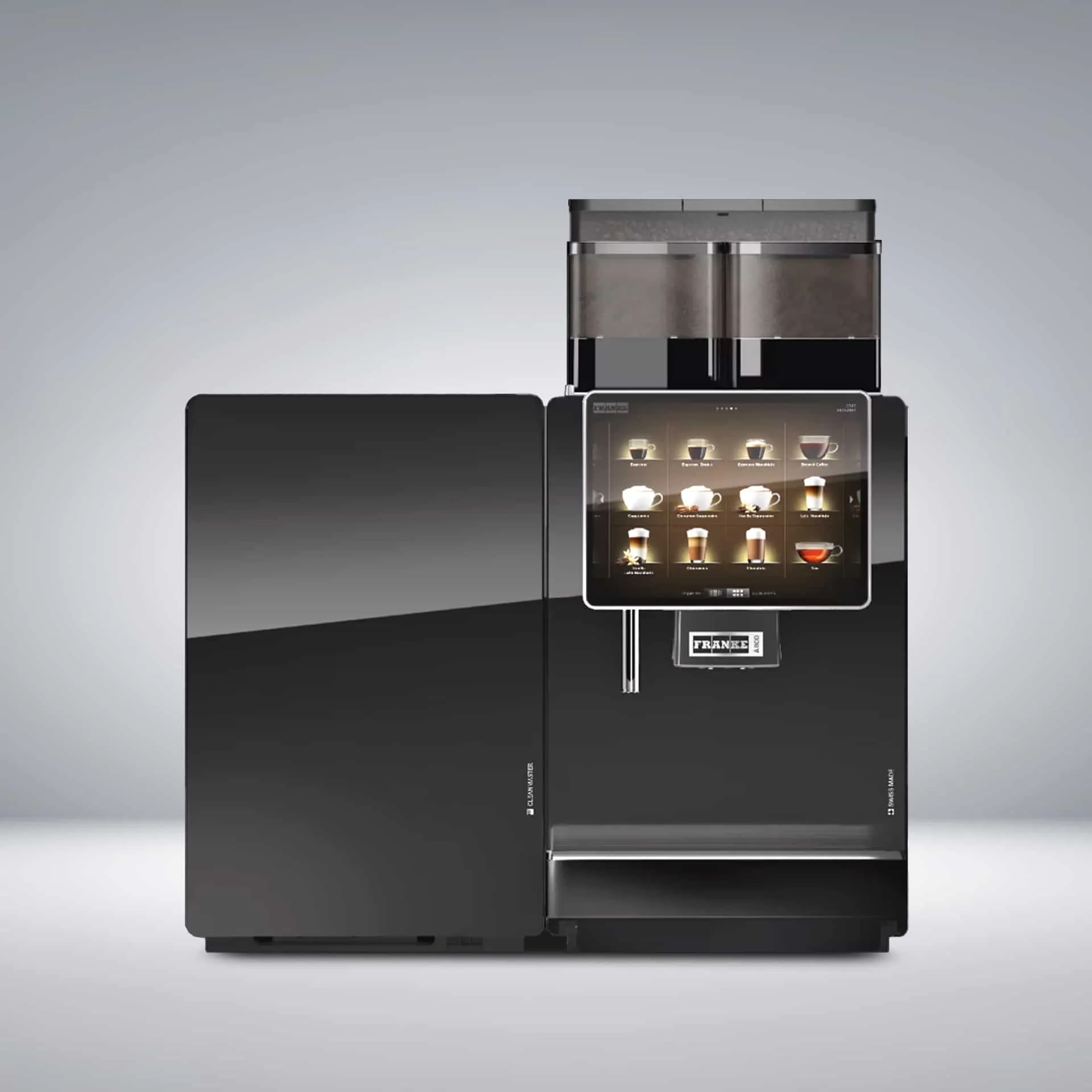
 FRANKE A400
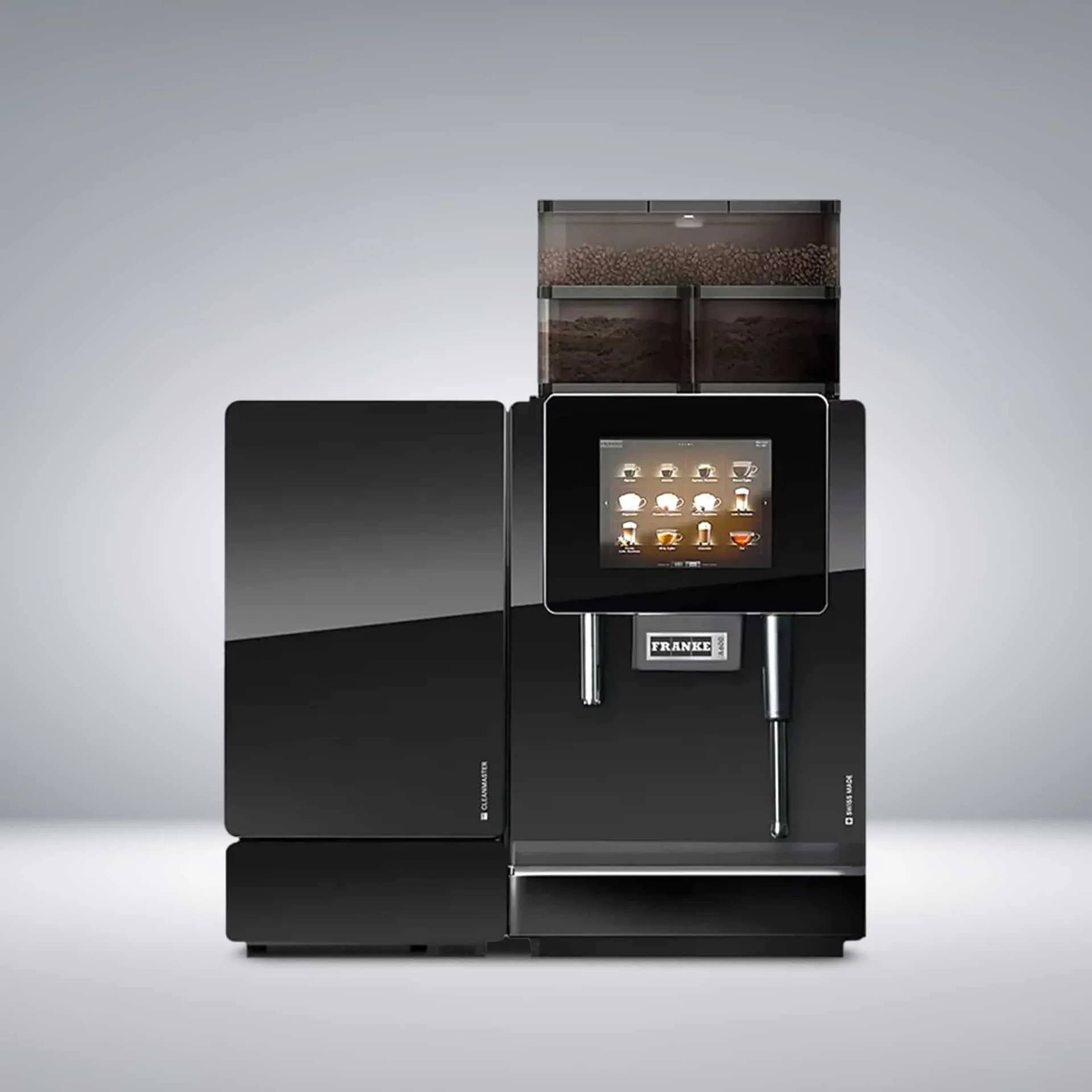
 FRANKE A600
 FRANKE A800
 Gaggia Milano LA BRILLANTE
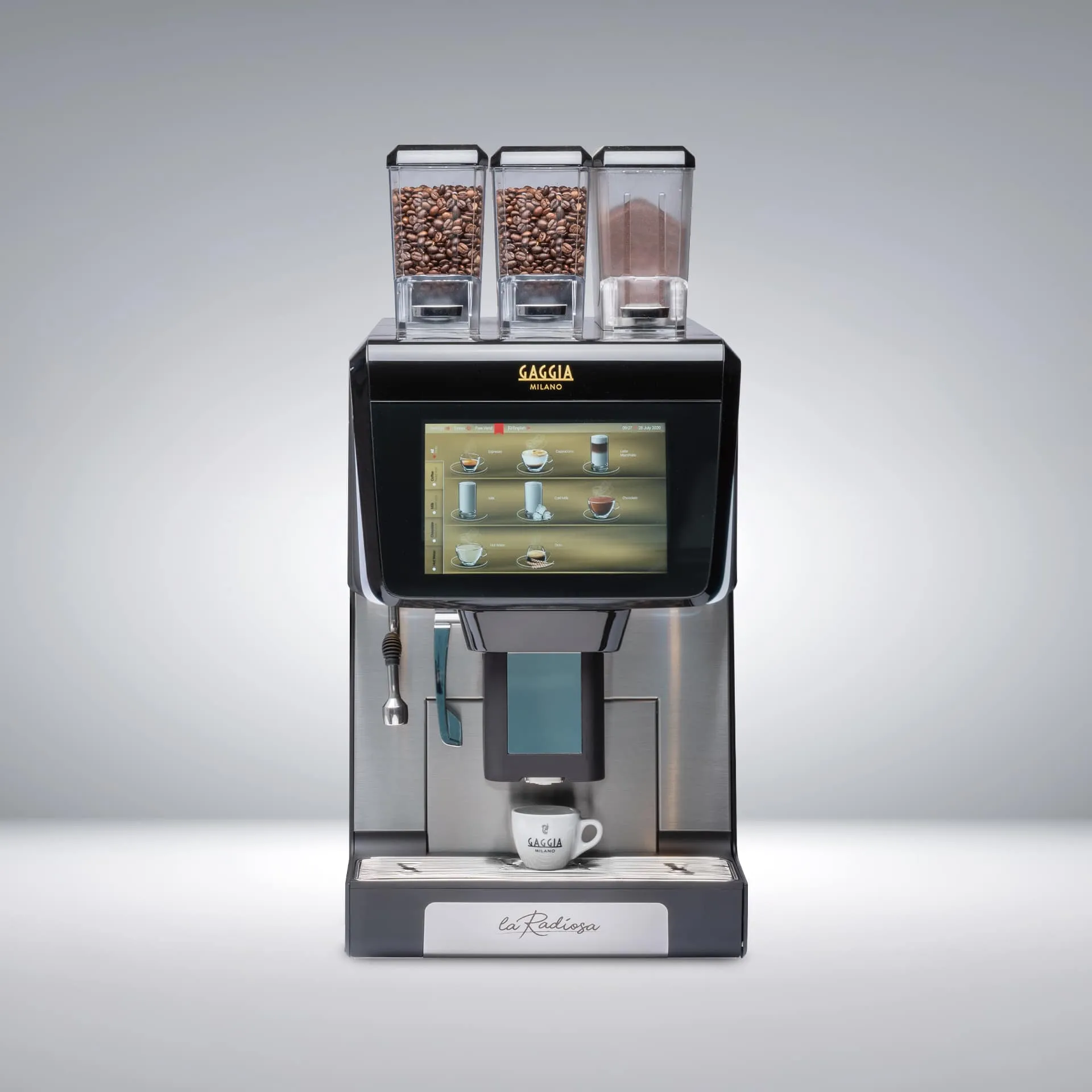
 Gaggia Milano LA RADIOSA
 Gaggia Milano LA SOLARE
 Jura GIGA X3 GEN II
 Jura GIGA X8 - GEN II
 Jura W8 - GEN II
 Jura X10
 NECTA KALEA PLUS
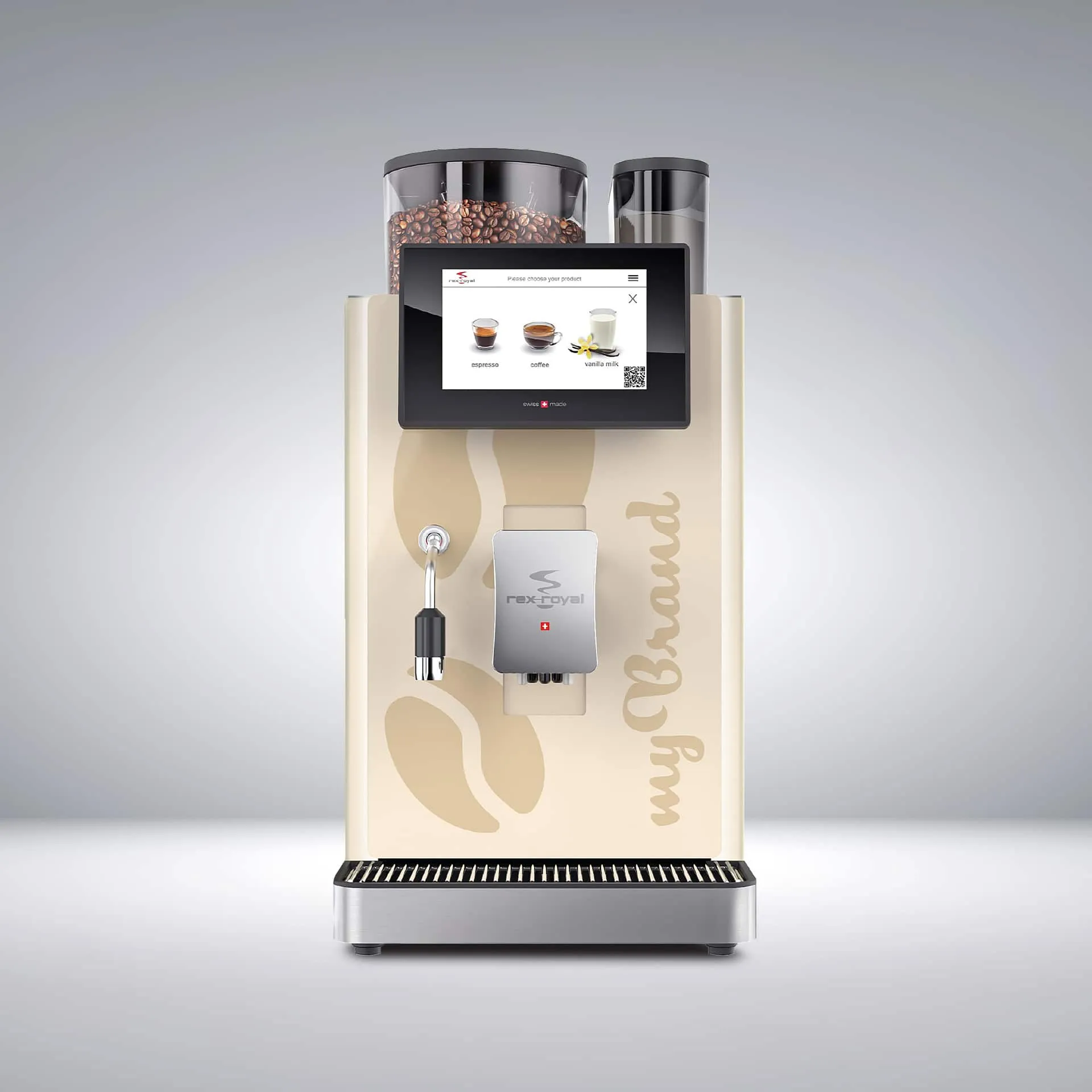
 Rex-Royal S1
Best Coffee Machine for Hotel Breakfasts
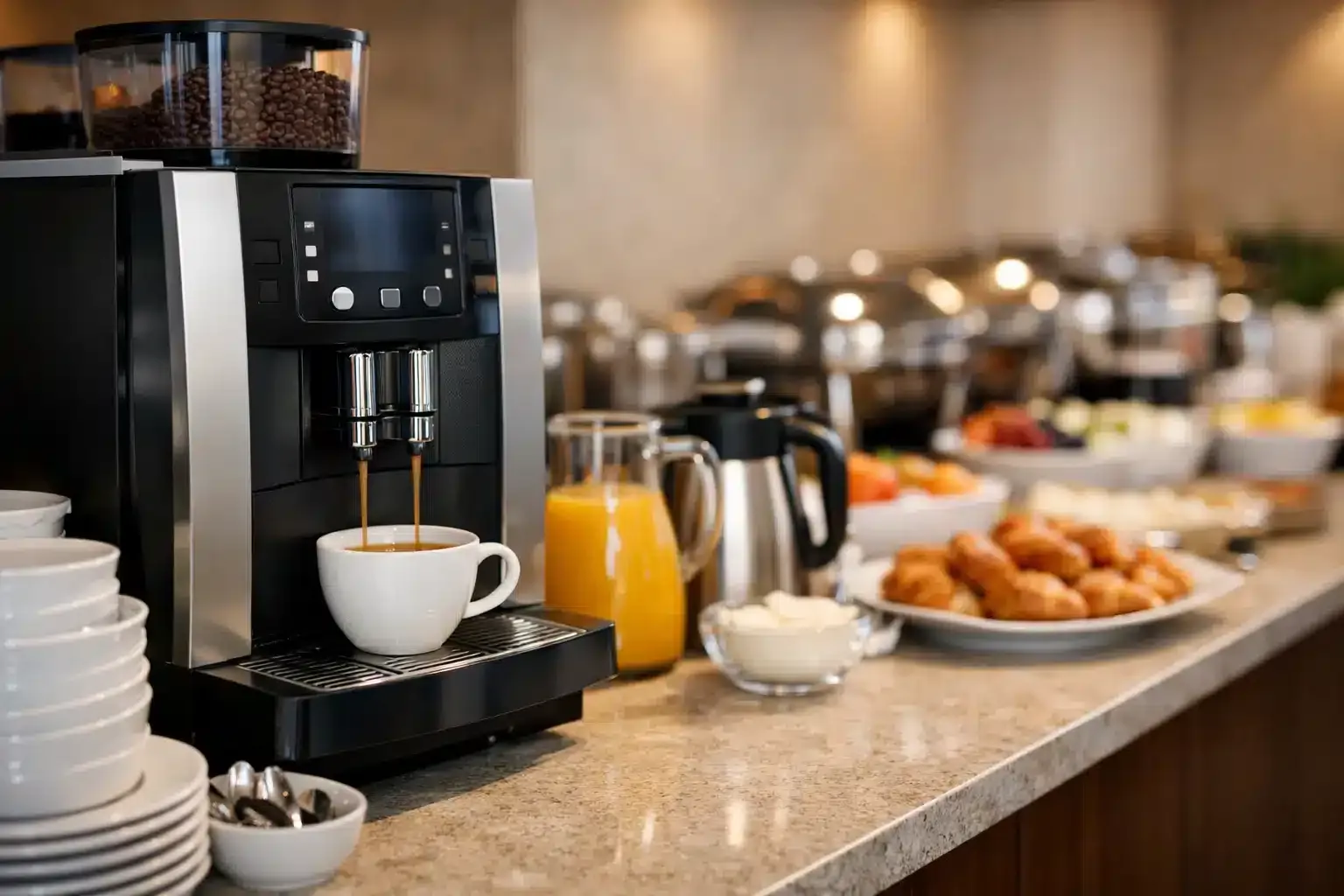
Breakfast service has a narrow window to make a strong impression. A guest who can get a proper flat white quickly before a meeting will remember it. A queue around a slow, temperamental machine will be remembered too. The best coffee machine for hotel breakfast is therefore not simply the one with the longest drinks menu. It is the machine that keeps pace with your busiest 45 minutes, fits the way your team works and serves coffee guests are happy to pay for or return for.
For most hotels, that points towards a commercial bean-to-cup machine with fresh milk, a sensible daily capacity and dependable support behind it. The right specification will vary considerably between a 20-room boutique property and a 200-bedroom business hotel, so the decision starts with service reality rather than a brochure.
What hotel breakfast service asks of a machine
Breakfast is different from all-day lounge service. Demand arrives in bursts, guests often want coffee immediately, and staff are simultaneously managing tables, buffets, dietary requests and checkout questions. A machine can look impressive in a quiet showroom yet struggle when 30 guests request cappuccinos within ten minutes.
Capacity matters, but it is not just a cups-per-day figure. Consider how many drinks are likely to be ordered at peak, how many contain milk and whether one member of staff will need to operate the machine while doing other jobs. A machine rated for 100 cups a day may be appropriate for a smaller hotel, but only if its output and recovery time can cope with the morning rush.
The best setup should also be easy for guests to understand if you offer self-service. A clear touchscreen, recognisable drink names and a reliable cup position reduce hesitation and prevent staff being pulled away from service. For attended breakfast, simple one-touch drinks still help your team produce consistency, regardless of who is on shift.
Best coffee machine for hotel breakfast: the key specification
A commercial bean-to-cup machine is usually the strongest all-round choice for a hotel breakfast room. It grinds beans to order, offers espresso-based drinks at the touch of a button and removes much of the variation associated with manual preparation. It is especially suited to hotels where guests expect cappuccinos, lattes, americanos and hot chocolate alongside filter coffee.
Fresh milk is worth serious consideration where coffee quality is part of the guest experience. It produces a more convincing cappuccino and latte than powdered milk, which can make a meaningful difference in premium, boutique and business-focused properties. The trade-off is daily cleaning and chilled milk management. A machine with an automatic milk cleaning programme makes this far more manageable, but someone still needs to complete the routine properly.
Powdered milk machines can be a practical choice in lower-volume or highly self-service environments, particularly where staffing is tight. They are quicker to manage and avoid refrigerated milk systems, although the drink quality is generally less refined. This is not necessarily a poor decision - it depends on the standard of breakfast you promise and the rate you are trying to achieve.
Look beyond the headline drinks menu and assess these operational details:
- Peak output: Ask how many milk-based drinks the machine can produce back-to-back, not just its total recommended cups per day.
- Bean hopper size: A larger hopper reduces refilling during service, while twin hoppers allow decaffeinated or alternative bean options.
- Water supply: A plumbed-in machine is usually preferable for busy breakfast rooms because it avoids refilling tanks at the worst possible time.
- Waste capacity: Grounds bins and drip trays should be large enough to last through the main sitting without constant emptying.
- Cleaning requirements: Daily and weekly tasks must be realistic for your breakfast team, including milk-system cleaning where relevant.
Match the machine to your hotel type
A small independent hotel with 15 to 30 rooms may need a compact fresh-milk bean-to-cup machine rather than an oversized model. If breakfast covers average 20 to 40 guests, a machine designed for around 60 to 100 drinks per day can offer good headroom. Choose a straightforward menu and focus on quality in every cup. Overspecifying can tie up budget in capacity you will rarely use.
A mid-sized hotel with a busy weekday trade needs greater resilience. Here, a plumbed-in machine with a larger bean hopper, chilled milk unit and a recommended volume of 150 to 250 cups per day is often a sensible starting point. If your breakfast room is popular with coach groups or corporate guests, a second machine can be more valuable than one larger unit. It protects service if one machine needs cleaning, refilling or attention.
For larger hotels, conference venues and properties serving significant breakfast covers, think in terms of a coffee station rather than a single machine. Two high-capacity bean-to-cup machines can split demand and reduce queues. Position one near the main buffet and another in a quieter area, or create separate stations for self-service coffee and barista-style drinks. This gives guests choice while making the operation more fault-tolerant.
Filter coffee still has a place in some hotel breakfast rooms. It is fast, familiar and efficient for guests who simply want a large black coffee. Pairing a quality filter coffee solution with a bean-to-cup machine can be an effective way to manage high demand without compromising the choice of espresso-based drinks. The right answer depends on your guest profile, not on chasing every possible menu option.
Plan the counter, water and guest flow
Even an excellent machine will underperform in the wrong location. Place it where guests can approach, make a selection and leave without crossing the route to the juice, pastries or hot buffet. A congested coffee point makes the whole breakfast room feel less organised.
Plumbed-in machines are particularly useful for hotels because they provide continuous water supply and allow staff to focus on guests rather than tank levels. They do require a suitable water connection, drainage considerations and enough counter depth for the machine, milk fridge and cleaning access. A site assessment before installation can identify these practical points early.
Do not forget water filtration. Water quality affects taste, limescale build-up and machine reliability. In hard-water areas, the right filtration arrangement is not an optional extra. It helps protect a commercial investment and supports more consistent coffee from one breakfast service to the next.
Cup choice also affects the experience. Small espresso cups, proper cappuccino cups and takeaway cups for departing guests can all be useful, but too many formats create clutter. Keep the station tidy, provide clear lids and stirrers where needed, and ensure cup supply is easy for staff to replenish.
Reliability is part of the coffee offer
Hotels do not have the luxury of postponing breakfast because a machine is out of action. Before choosing, ask what happens if the equipment needs attention. Is maintenance available? How quickly can support be arranged? Are cleaning products and replacement filters readily supplied? These questions have a direct bearing on guest satisfaction.
Rental and lease arrangements can make commercial equipment more manageable, particularly where a hotel wants a premium machine without committing all capital upfront. They can also offer useful flexibility if occupancy, breakfast covers or the layout of the property changes. The best arrangement is one that reflects your expected usage and includes a clear understanding of service responsibilities.
Coffee beans deserve the same attention as the machine. A capable bean-to-cup machine cannot make memorable coffee from stale or poorly suited beans. Select a blend that works well in milk-based drinks as well as americanos, then maintain a reliable supply so the breakfast team is not swapping in emergency supermarket beans at the end of a busy week.
Make the choice easier with real service data
Start with actual breakfast covers from your busiest recent weeks, then estimate drinks per guest rather than relying on room count alone. Business guests may drink more coffee than leisure groups, while a hotel with strong breakfast inclusions will see different demand from a property selling coffee separately. Include staff drinks, meeting-room demand and any lobby use if the machine will serve more than breakfast.
A practical supplier should ask about daily volume, peak periods, available space, water access, milk preference, budget and the level of support you need. Full House Coffee takes this consultative approach because the right machine is the one that performs in your hotel, not merely on a specification sheet.
Choose for the busiest breakfast you need to deliver, then make daily operation simple enough that your team can give guests their attention. That is how a coffee machine becomes a quiet strength of the stay rather than another item on the morning checklist.