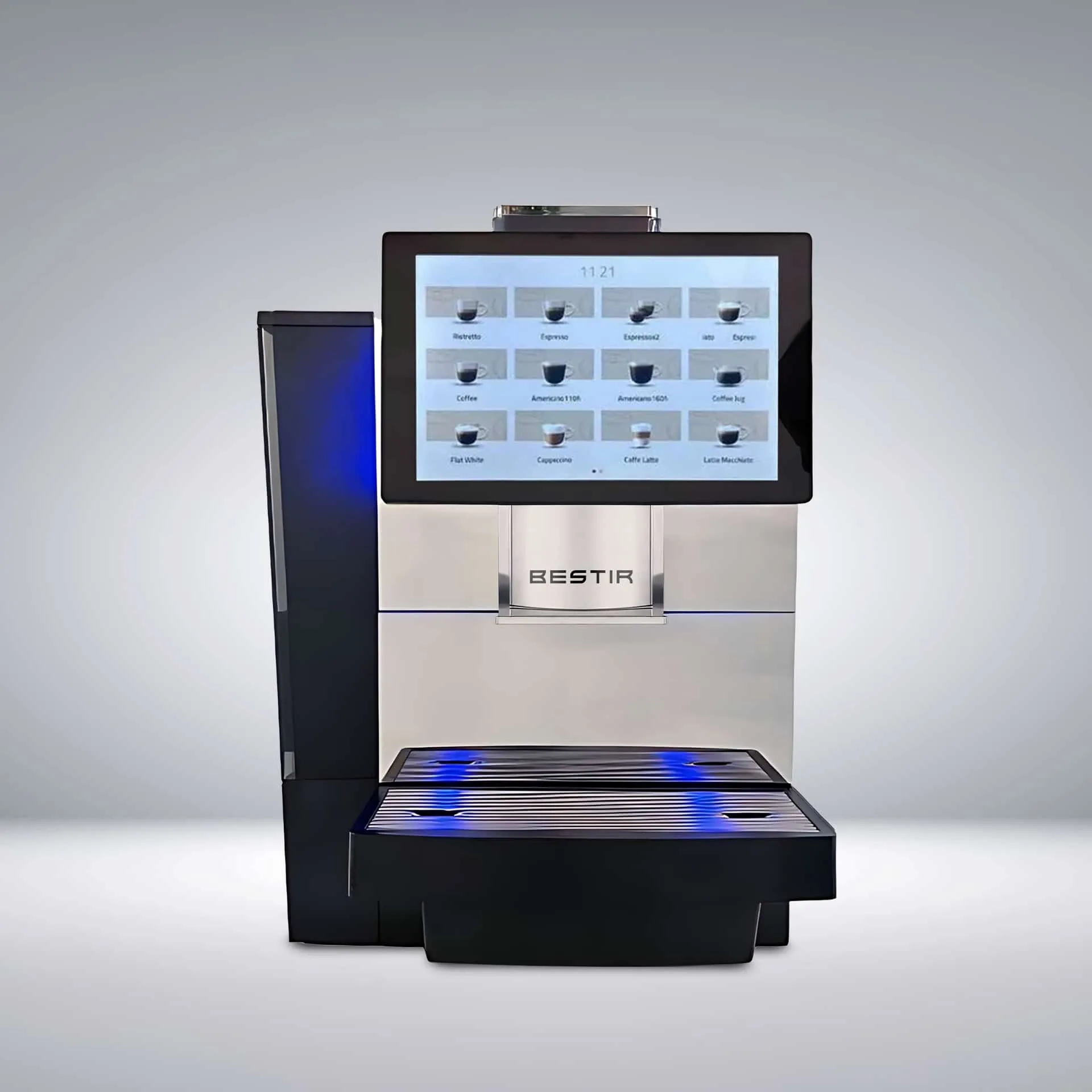
 BESTIR BM50
 BESTIR BM80
 BESTIR BMC300
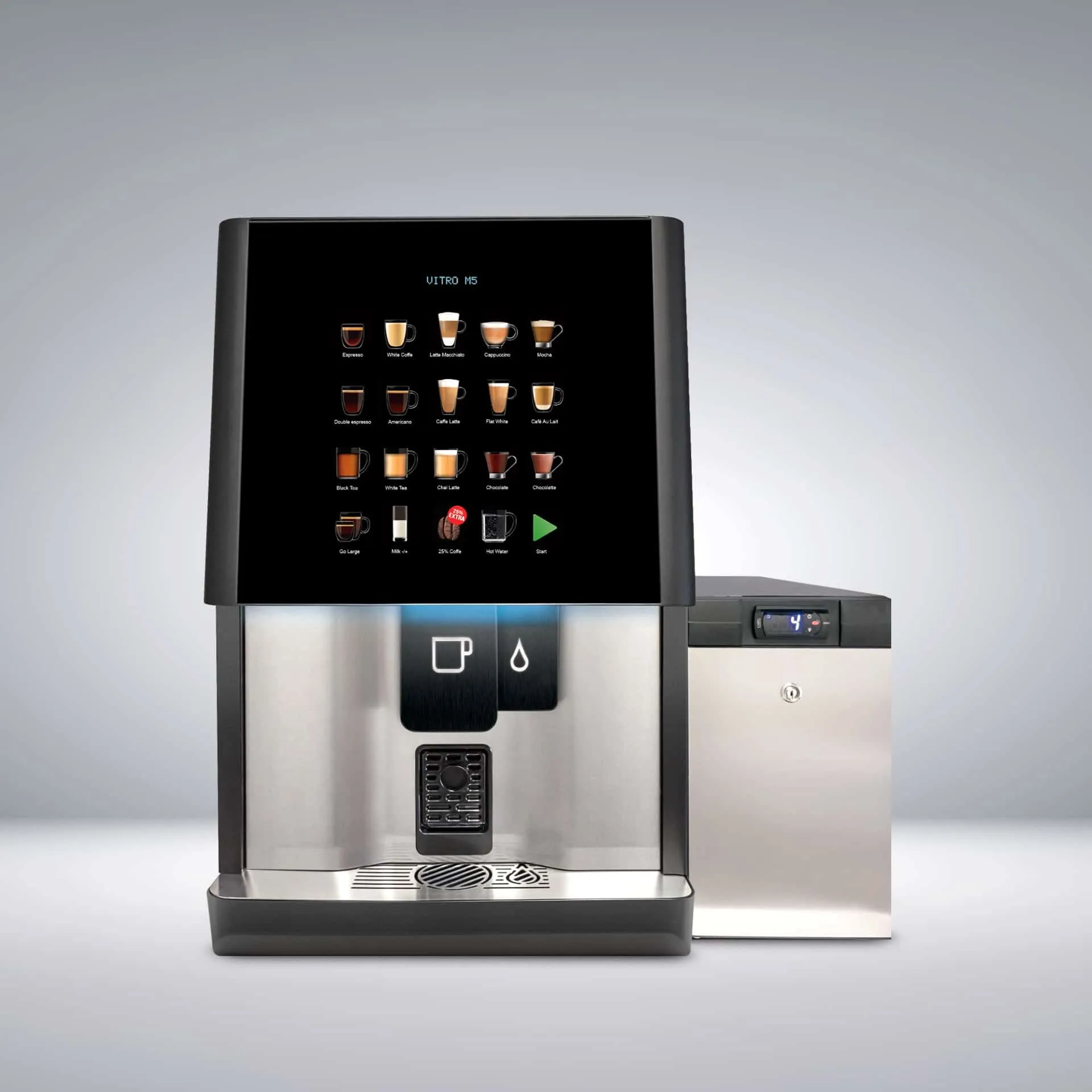
 Coffetek Vitro M5 MIA
 Coffetek Vitro S1
 Coffetek Vitro S1 MIA
 Coffetek Vitro X1 MIA
 Coffetek Vitro X3
 Primio Coffee Beans
 Espresso Coffee Beans
 Ultimo Coffee Beans
 Vero Coffee Beans
 Coffetek Vitro X4 ESP
 FRANKE A300 FM
 FRANKE A400
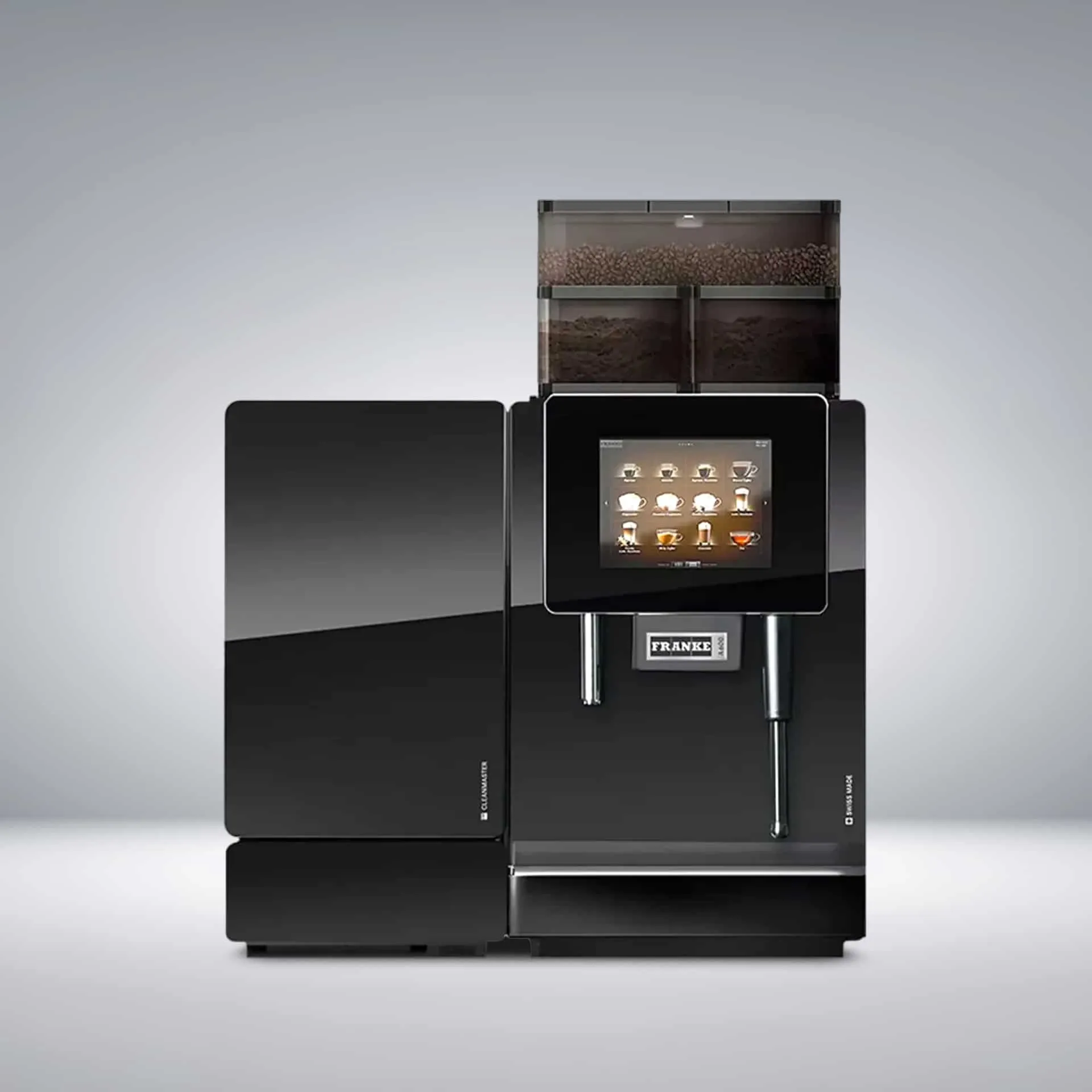
 FRANKE A600
 FRANKE A800
 Gaggia Milano LA BRILLANTE
 Gaggia Milano LA RADIOSA
 Gaggia Milano LA SOLARE
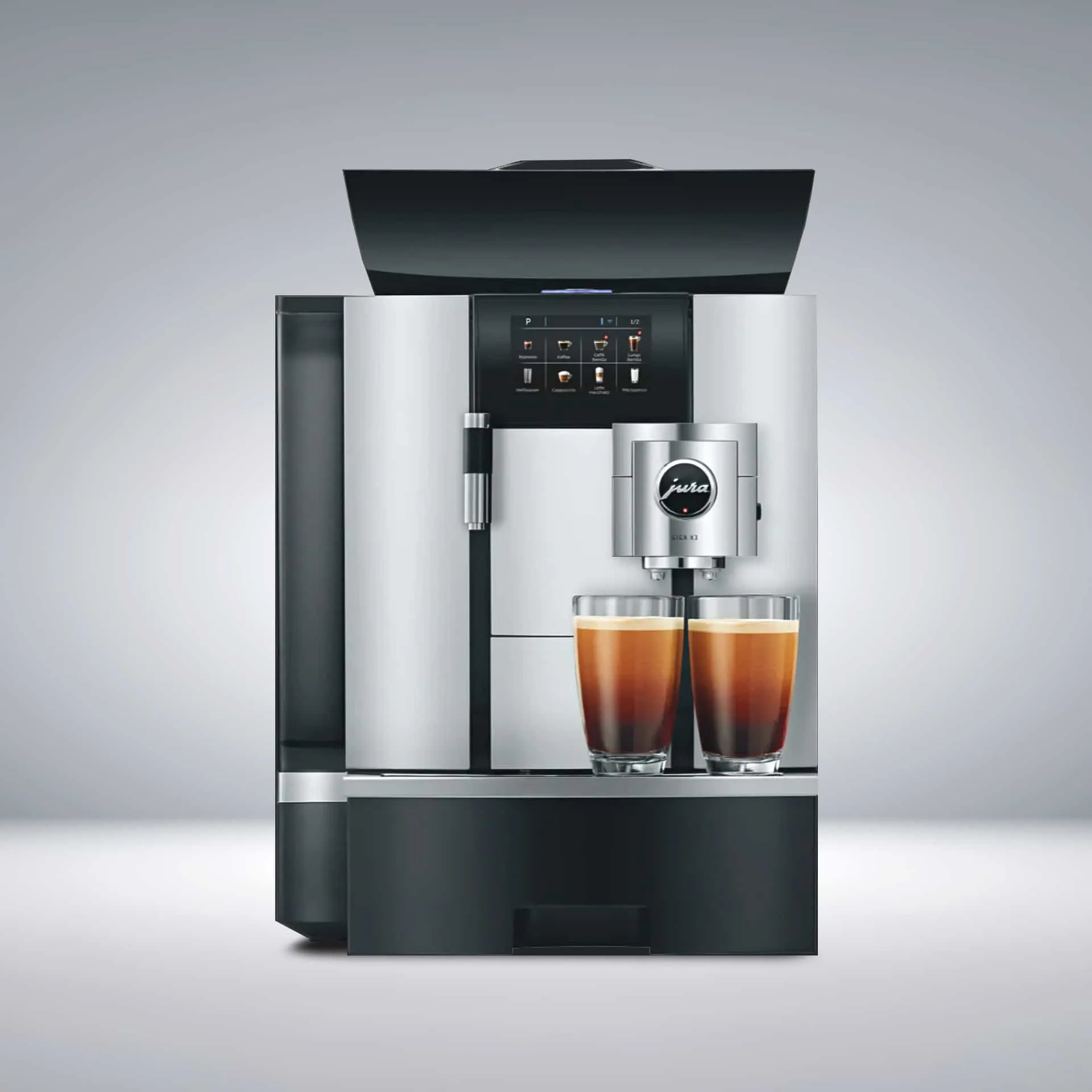
 Jura GIGA X3 GEN II
 Jura GIGA X8 - GEN II
 Jura W8 - GEN II
 Jura X10
 NECTA KALEA PLUS
 Rex-Royal S1
Plumbed Versus Tank Coffee Machines for Workplaces
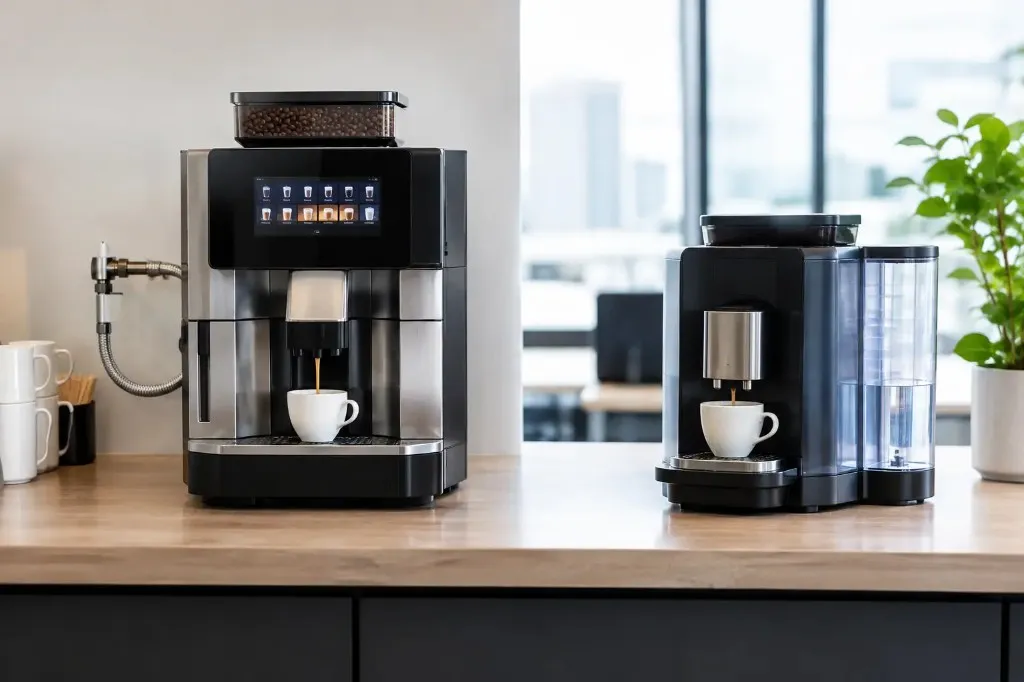
The difference between plumbed versus tank coffee machines becomes very clear at 10:15 on a busy Tuesday morning. If a machine needs refilling while staff, visitors or hotel guests are waiting for coffee, a lower upfront cost can quickly feel like a false economy. Equally, a mains water connection is not automatically the right answer when space, plumbing access or flexibility are limited.
For a commercial workplace, the best choice comes down to daily demand, the location of the machine and who will look after it. Both formats can produce excellent bean-to-cup coffee. The practical distinction is how water reaches the machine, and what that means for your team’s time, installation requirements and service routine.
Plumbed versus tank coffee machines: the practical difference
A plumbed coffee machine, sometimes called a mains-fed machine, connects directly to the building’s cold-water supply. It automatically draws water as drinks are made, so there is no internal water tank for staff to fill during the day. Most professional installations also include suitable water filtration to help protect the machine and support consistent coffee quality.
A tank coffee machine has a removable or integrated reservoir. Someone fills it manually, usually at the start of the day and again when needed. It does not require a fixed water connection, which makes it easier to position in a reception area, meeting space, showroom or temporary office setup.
Neither type is inherently more premium. The quality of the grinder, brewing system, milk setup, coffee beans and cleaning routine will have a greater influence on the cup. Water supply affects convenience and operating flow.
When a plumbed-in coffee machine is the better business choice
A plumbed machine is usually the sensible option for high-use environments. Think busy offices, staff canteens, hotels, customer lounges and cafés where the machine is expected to serve coffee throughout the day without interruption.
The main advantage is consistency of availability. There is no need for someone to check the water level, carry a jug across the office or pause service to refill a reservoir. For a workplace serving 60, 100 or more drinks a day, that time adds up quickly. It also reduces the chance of a visitor being met with a machine that cannot make their chosen drink.
Plumbed machines suit businesses that want coffee provision to run quietly in the background. Facilities teams can focus on essentials such as beans, milk, cleaning products and routine checks rather than frequent water top-ups.
Water quality matters as much as water access
A direct connection should be paired with the correct filtration approach. Water varies across the UK, and hard water can contribute to limescale build-up inside boilers and brewing components. That can affect reliability, drink temperature and long-term maintenance costs.
A proper site assessment considers water hardness, pressure, nearby connections and drainage where relevant. It is not simply a case of placing a machine near a sink. In some premises, fitting a plumbed machine is straightforward. In others, the route to a water supply may make a tank model more practical or more cost-effective.
The trade-off: installation and location
A mains-fed machine needs a suitable water connection, and installation may involve a qualified engineer. This can add initial cost and means the machine is less simple to move later. If your office is about to be refurbished, you occupy a short-term site or your ideal coffee point is in the middle of an open-plan floor, that restriction deserves consideration.
For many permanent sites, though, the upfront planning is worthwhile. Once installed, a plumbed system creates a more self-sufficient refreshment point and is often the easier option to manage at scale.
When a tank coffee machine makes more sense
Tank machines are not just for low-volume use. A well-chosen commercial machine can serve a busy team, especially where staff are comfortable with a straightforward daily refill routine. Their real strength is flexibility.
If there is no accessible mains water supply, a tank machine can be installed where it will have the most impact: beside a boardroom, in a client-facing showroom, at a pop-up hospitality area or in a compact kitchen. There is no need to compromise the location simply because plumbing is unavailable.
They are also helpful for organisations that need the option to relocate equipment. A growing business may move offices, rearrange departments or change the role of a space. Taking a tank machine to its new position is generally much simpler than altering pipework.
Capacity determines whether a tank becomes a burden
The key question is not whether a tank machine can meet your drink volume. It is whether it can do so without becoming another task on an already full facilities checklist.
A small office with 15 to 25 regular coffee drinkers may find that filling the tank each morning is perfectly reasonable. In a customer-facing environment with a constant flow of drinks, repeated refilling can interrupt service and create avoidable frustration. Fresh milk machines may also require more attention during the day, so it is worth considering the combined workload rather than water alone.
Tank capacity varies between machines. The headline figure is useful, but actual use depends on drink size, hot-water drinks, flushing cycles and the number of milk-based coffees being served. A machine providing americanos, teas and regular cleaning rinses will use more water than cup counts alone suggest.
Consider the whole operating routine
Choosing between plumbed and tank models should sit within a wider machine decision. Daily cup volume is important, but so are peak periods, drink preferences and the people responsible for upkeep.
For example, an office of 80 employees may only average 45 drinks daily, yet produce most of them between 8:30 and 10:00. A machine must handle that rush without queues, refilling or loss of quality. A smaller workplace may serve fewer coffees but need premium fresh milk drinks for clients. In that case, the machine’s milk system and cleaning process could matter more than its water format.
Ask practical questions before deciding:
- How many drinks are expected on an average day and at peak times?
- Is there a suitable cold-water connection close to the preferred location?
- Who will refill, clean and check the machine each day?
- Will the machine need to move within the next year or two?
- Does the site have hard water or particular filtration requirements?
These answers usually point clearly in one direction. They also help avoid selecting a domestic-style machine for a commercial workload, where capacity and serviceability matter more than a familiar retail price.
Cost, rental and maintenance considerations
A tank machine can have lower installation costs because no plumbing work is required. That makes it attractive for businesses wanting a quick setup or a more modest initial outlay. However, the ongoing cost of staff time should not be ignored, particularly in a high-volume setting.
A plumbed machine may require a higher initial investment, but it can reduce day-to-day intervention and support a more professional coffee service. With either format, planned maintenance, appropriate filtration and regular cleaning are essential. Neglecting cleaning to save time is rarely economical when it affects drink quality, hygiene or machine performance.
Rental and leasing can make either option easier to budget for, especially when the requirement may change. A business growing from 30 to 100 employees may need to upgrade capacity. A hotel adding a breakfast area may need a different machine and a dedicated water supply. Flexibility in the agreement matters as much as the machine specification.
Full House Coffee takes this wider view, matching commercial machines to the site, expected cup volume, budget and service needs rather than pushing a one-size-fits-all answer.
Choose the setup that removes friction
The right coffee machine should make a good cup feel routine, not create another job for the person managing the workplace. Choose a plumbed model when demand is high, the site is stable and uninterrupted service is the priority. Choose a tank model when positioning freedom, simpler installation or future mobility matter more.
Before committing, map the busiest hour of your day, not just your average cup count. That is where the right water setup earns its place, keeping coffee available when your people and guests expect it most.