 BESTIR BM50
 BESTIR BM80
 BESTIR BMC300
 Coffetek Vitro M5 MIA
 Coffetek Vitro S1
 Coffetek Vitro S1 MIA
 Coffetek Vitro X1 MIA
 Coffetek Vitro X3
 Primio Coffee Beans
 Espresso Coffee Beans
 Ultimo Coffee Beans
 Vero Coffee Beans
 Coffetek Vitro X4 ESP
 FRANKE A300 FM
 FRANKE A400
 FRANKE A600
 FRANKE A800
 Gaggia Milano LA BRILLANTE
 Gaggia Milano LA RADIOSA
 Gaggia Milano LA SOLARE
 Jura GIGA X3 GEN II
 Jura GIGA X8 - GEN II
 Jura W8 - GEN II
 Jura X10
 NECTA KALEA PLUS
 Rex-Royal S1
Workplace Coffee Trends for Better UK Offices
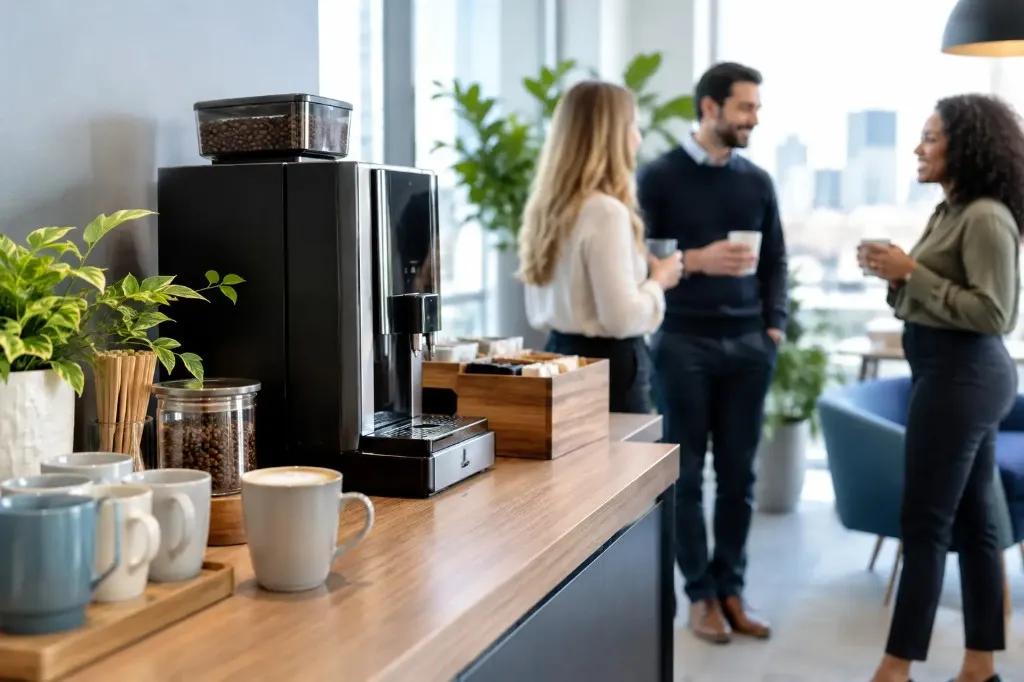
The quickest way to expose an underperforming office coffee set-up is to stand near it at 9:15am. Queues form, milk runs out, someone wrestles with a kettle, and the good instant coffee has mysteriously vanished. Workplace coffee trends are changing because employees and visitors now expect a better everyday experience, but businesses still need that experience to be practical, dependable and commercially sensible.
For UK employers, coffee is no longer simply a pantry item. It supports the return to the office, creates a more welcoming customer environment and gives teams a reason to pause together. The strongest trend is not one particular drink or machine. It is a move towards coffee service that feels considered, while remaining easy to run.
Workplace coffee trends are raising the baseline
A basic hot drinks station may still suit a small, low-traffic workplace. However, in busy offices, showrooms and hospitality settings, expectations have moved closer to what people receive in a good café. Freshly ground beans, consistent espresso drinks and properly textured milk are increasingly viewed as standard rather than a luxury.
That does not mean every business needs a barista station. In fact, most do not. The practical answer is often a commercial bean-to-cup machine that produces espresso-based drinks at the touch of a button. It gives colleagues and guests a choice of americano, cappuccino, latte or flat white without requiring specialist training or placing another task on reception staff.
The right specification depends on demand. A machine serving 20 people who each drink one or two coffees per day has very different requirements from one in a 150-person office where the morning rush is concentrated into 30 minutes. Cup volume, peak demand, available counter space, water access and the preferred milk format all matter more than an impressive-looking machine on its own.
Fresh milk remains a premium signal
Fresh milk coffee has become a defining feature of higher-quality workplace service. It provides a more café-like result and is particularly valuable in client-facing settings, executive areas, hotels and workplaces that want their hospitality offer to reflect the wider brand.
There is a trade-off. Fresh milk systems require regular cleaning and suitable refrigeration, so they work best where a clear daily routine is in place. For teams that need a simpler operation, powdered milk machines can still provide a fast, consistent and lower-maintenance option. The best choice is not about following fashion. It is about matching the drink quality expected with the time and care the team can realistically give the machine.
The office is becoming a hospitality space
Hybrid working has made each day in the workplace more intentional. When people do travel in, they notice the details: the welcome at reception, the meeting room, the quality of lunch and, yes, the coffee. A poor cup will not determine whether someone accepts a job or renews a contract, but repeated small signals shape how a workplace feels.
Coffee points also serve a useful operational purpose. They create informal meeting spaces without booking a room and give visitors a comfortable pause before an appointment. In a showroom, a fresh coffee can encourage customers to stay longer. In a hotel or professional practice, it can make a waiting period feel more considered.
This is why the trend is moving away from hiding the coffee machine in a utility area. Businesses are placing attractive, capable machines in reception zones, breakout spaces and customer areas, provided there is enough room for cleaning, stock storage and safe use. Appearance matters, but serviceability matters more. A machine that looks premium yet is awkward to refill or clean will soon disappoint.
Choice matters, but too much choice slows service
Plant-based milk, decaffeinated coffee and lower-caffeine options are now common requests. Offering them can make a workplace feel more inclusive, especially for mixed teams and visiting clients. The sensible approach is to provide choice where it will genuinely be used, rather than building an overcomplicated drinks menu.
A reliable bean-to-cup machine can cover the core menu exceptionally well. Then a separate decaf bean hopper, decaf ground coffee option or clearly managed supply of decaf can address demand without wasting stock. Oat milk is often the most requested alternative, but it needs to be managed separately from a fresh milk system for hygiene and quality reasons.
Keep the experience intuitive. Clear labels, the right cups and lids where needed, and a nearby bin or recycling point prevent the coffee area from becoming a daily mess. These details are not glamorous, but they protect the investment and reduce the burden on office or facilities teams.
Sustainability is becoming an operational question
Environmental claims can be easy to make and difficult to assess. For workplace buyers, the more useful questions are practical: how much packaging does the system create, can ingredients be ordered in sensible quantities, how efficiently does the machine use energy, and what happens when equipment needs repair?
Bean-to-cup coffee can reduce the reliance on single-serve pods, while buying quality beans in appropriate pack sizes can make stock control simpler. A plumbed-in machine may also reduce the labour involved in topping up water tanks, although it requires a suitable water connection and a site assessment before installation.
Keeping equipment working well is another overlooked part of responsible purchasing. A serviceable commercial machine, backed by maintenance support and routine cleaning, is more useful than a cheaper unit that becomes unreliable after heavy use. The most sustainable solution is usually one that stays in service, makes good coffee consistently and is sized correctly from the start.
Workplace coffee trends favour flexibility over guesswork
Many organisations are cautious about committing to equipment because headcount, office attendance and budgets can change. That is a sensible concern. A machine selected for a full office five days a week may be excessive if only a portion of the team attends regularly. Equally, an undersized machine can create queues, frequent refilling and avoidable downtime when attendance picks up.
Rental, leasing and purchase options each have their place. Purchasing may suit an established site with clear long-term demand and available capital. Rental or leasing can help businesses preserve cash flow, access a higher-specification machine and adapt as needs change. The terms, service cover and consumable supply should be considered alongside the monthly figure, not after the decision is made.
A consultative assessment is useful here. It should establish daily cups, the busiest periods, whether fresh milk is appropriate, where the machine will sit, and who will handle simple cleaning tasks. Full House Coffee takes this practical approach because the right recommendation is usually more valuable than the most expensive one. No pressure, just expert advice.
Reliability is now part of employee experience
A coffee machine only improves the workplace when it is available. Empty hoppers, blocked waste containers and unclear cleaning instructions quickly turn a premium amenity into an irritation. Businesses are therefore placing more value on reliable equipment, responsive support and replenishment that does not rely on someone remembering to place an urgent order.
Set clear ownership from day one. Someone should know how to empty grounds, rinse milk components, top up beans and report a fault. This need not become a specialist role. With the right machine and handover, these are straightforward daily checks. What matters is that they are built into the routine rather than left to chance.
For higher-volume sites, planned maintenance offers reassurance. It can reduce interruptions, protect drink quality and help identify wear before it becomes a bigger problem. In a customer-facing environment, that consistency is especially valuable: guests should receive the same good coffee on a busy Tuesday as they do on a quiet Friday.
How to choose a trend-proof coffee set-up
Rather than chasing every new drink preference, start with the experience your workplace needs to deliver. Consider the number of users, the likely cups per day, the level of visitor traffic and whether the machine must cope with concentrated peaks. Then decide how much menu choice is useful, whether fresh milk is justified, and what daily care can be managed on site.
It is also worth planning for change. A growing team, an office move or a revised hybrid-working pattern can alter demand quickly. A flexible commercial arrangement and a supplier that understands both machines and ongoing coffee supply make those changes easier to manage.
The best workplace coffee set-up does not need to be flashy. It should make a consistently good cup, suit the people using it and quietly keep working while everyone gets on with their day. That is the sort of coffee service people remember for the right reasons.